




Cricket rewards the player who can repeat a skill on demand. Most beginners start by trying to hit the ball as hard as possible, or to bowl as fast as they can. Those instincts are natural, and they slow you down. A hard swing with no setup misses far more balls than a controlled one, and a fast delivery that misses its length gets punished in every format.
Below is a plain-English guide to the skills that decide matches: batting, bowling, fielding, and wicket-keeping. It is written for new players and parents in the United States who want a clear path from watching cricket to actually playing it. If words like over, wicket, or leg side are still unfamiliar, read our cricket basics and rules guide first, then come back.
Quick Answer
Cricket skills fall into four groups: batting, bowling, fielding, and wicket-keeping. Beginners improve fastest by picking one skill in each area, practising it with a partner, and then using it in a real match. You do not need to be good at all four to play a team game.
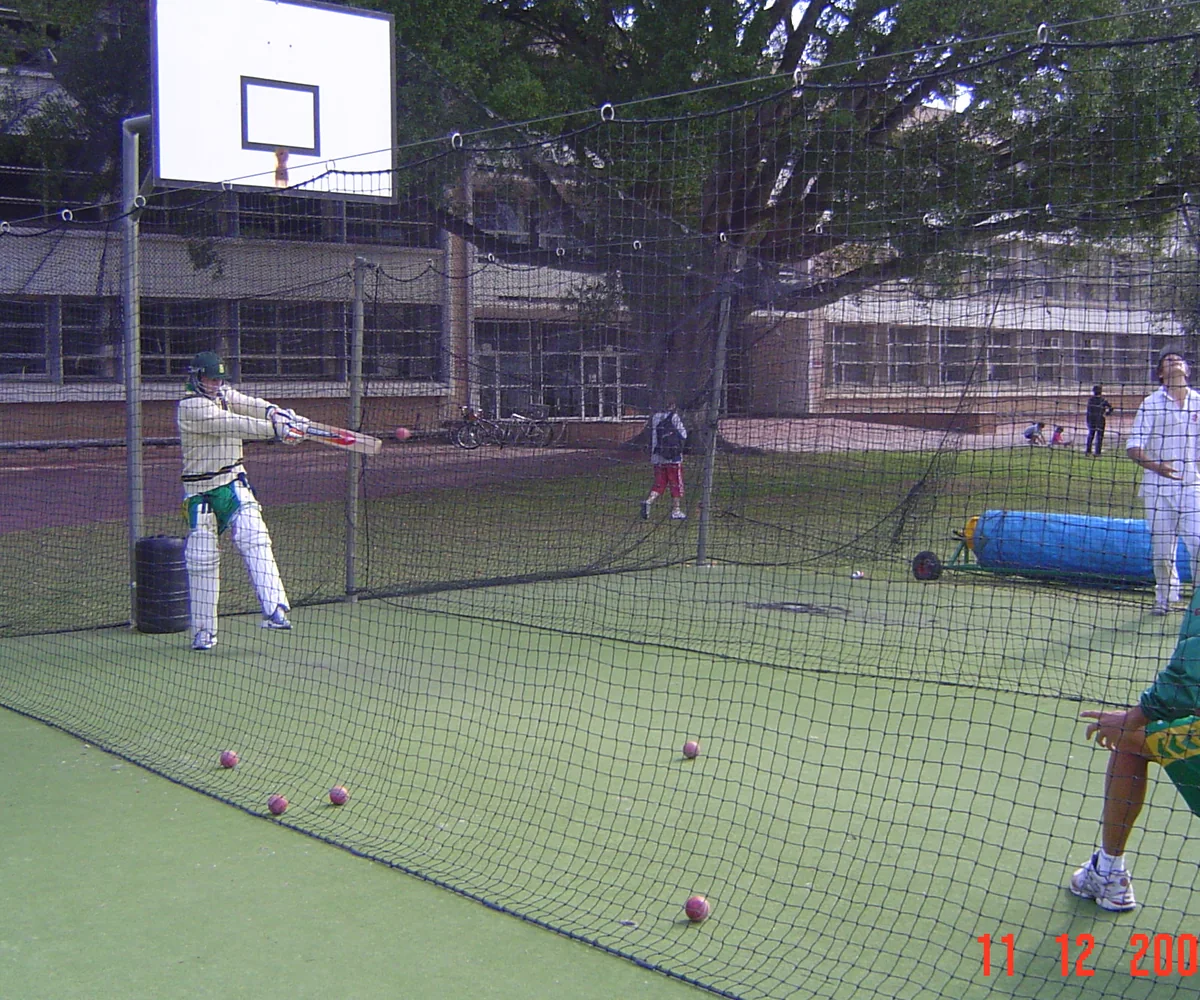
Photo: AB de Villiers playing a pull shot in the practice nets. Photograph by Julian Berzins, licensed under CC BY-SA 3.0.
What Cricket Skills Are, and Why They Matter
A skill is something you can repeat on purpose, under pressure, more than once. Talent helps you get a first chance. Repetition is what makes you reliable.
Cricket is unusual because it asks you to repeat a very small set of actions many times in one match. A batter might play the same shot 40 times. A bowler delivers the same ball six times in an over, then bowls it again in the next one. A fielder might pick the ball up 25 times. Skill is what makes each repetition slightly better than the last.
Four areas cover every action in the game:
| Skill area | What you do | Core skills to build |
|---|---|---|
| Batting | Score runs with the bat | Grip, stance, footwork, balance, shot selection |
| Bowling | Dismiss batters and limit runs | Grip, accuracy, line, length, pace, variation |
| Fielding | Stop the ball and support the bowler | Catching, ground fielding, throwing, positioning |
| Wicket-keeping | Take the ball behind the stumps | Positioning, reflexes, safe hands, running |
You only need to be strong in one or two. Every side needs a bowler who can take wickets, a batter who can hold an innings, and fielders who will not drop the ball. Pick the areas that suit you and get genuinely good at them.
Batting Skills
1. Stance and Balance
Stand with your feet about shoulder-width apart and your toes pointing slightly open toward the bowler. Keep your knees slightly bent and your weight on the balls of your feet, not your heels. Head still, eyes level, looking at the spot where the ball will arrive. Your back should be straight but not stiff.
Balance sits underneath every shot you will ever play. If the ball arrives and you are already leaning back, you are late. If you cannot play a second shot immediately after the first, the stroke was rushed.
2. The Grip
For a right-handed batter, the right hand, called the bottom hand, goes on the handle. The V between your thumb and forefinger should sit against the top edge of the bat, right where the handle meets the blade. The left hand, called the top hand, rests just above it. Keep the fingers together, thumbs lightly touching, and squeeze gently.
A tight grip slows the hands down and is the most common cause of a mistimed shot. Hold the bat firmly enough that it will not twist, and not firmly enough that your forearms lock. Keep your hands as close to the top of the bat as you can manage, because that is where the bat feels fastest.
Do not hold the bat in the middle of the blade, and do not pick a bat so heavy that you cannot lift it quickly. If you are new, start light. Speed of the hands matters more than strength at the start.
Our batting grip guide for beginners walks through the hand position in detail, covering the top hand, the bottom hand, and how tightly to hold.
3. Footwork and the Cover Drive
Footwork is the part beginners skip, and it is the part that makes shots reliable. There are two rules that cover most situations. Step forward with your front foot when the ball is full length and you want to hit it along the ground. Step back onto your back foot when the ball is short and you want to cut or pull it.
The cover drive is the best first shot to learn, because it teaches both. The ball arrives on a good length, a few paces from the stumps. You step forward to meet it, keep your head over the ball, and swing straight down the ground. The bat finishes high over your shoulder.
Three faults show up almost every time. Swinging across the body instead of straight, playing a full-length ball with the back foot, and watching the bowler instead of the ball.
If you want the full breakdown of that shot, including the step-by-step sequence and the five faults to watch for, read our cover drive technique guide.
4. Shot Selection
Play the ball as it is, not as you wish it were. A full, straight ball is for driving. A ball outside off stump can be cut or left alone. A short ball can be pulled. Trying to play a cover drive to a short ball is how batters get themselves out for nothing.
A beamer is a full toss that bounces above shoulder height, and it gives a batter very little time to react. Having a plan for it before it arrives is a real skill, not a luxury. Our guide to the beamer ball explains what it is and why it matters.
If you are still working out what each delivery is worth, our guide to the cricket scoring system covers runs, extras, and boundaries.
Bowling Skills
1. Accuracy Before Speed
A bowler who hits the same spot again and again will trouble a batter far more than a faster bowler who misses. Most runs in cricket come from deliveries the batter could not have scored from, so length and line are the priority.
Line is the path the ball takes on its way to the batter. Length is how far down the pitch it bounces. Good length is the length that makes the batter play the ball or miss it entirely.
2. Pace Bowling
Hold the ball with your index and middle finger resting across the seam. A delivery with the seam pointing straight at the pitch can bounce sharply. Turning the seam sideways makes the ball move through the air instead.
Run in, land on your front foot, keep the bowling arm straight, and follow through past the ball. Throw, do not bowl, and remember that a flat, side-on release is hard to control.
If you are new to bowling, work through our pace bowling basics first, which covers the grip, the run-up, and the deliveries worth learning first.
Once the ball is older, a seam bowler can make it move the other way instead. Our guide to reverse swing explained covers that in detail.
Once the basics are clean, add one variation at a time. A slower ball upsets the batter’s timing. A short ball tests their handling. A yorker or a wide yorker stops them scoring at the end of an over. Beginners who attempt all three together usually lose their accuracy. Our look at the best death bowlers in the IPL shows what controlled execution looks like at the highest level.
3. Spin Bowling
Spin is the other main type of bowling. An off-break turns one way and a leg-break turns the other, depending on the type of spin you bowl. Both are delivered with the index and middle finger across the seam, using the wrist rather than the arm.
Turning the ball is only part of the job. Deception matters more. A spinner who bowls exactly the same delivery every time is easy to read, and a googly or a quicker ball is what keeps a batter guessing.
4. Bowling Discipline and the Rules
Three Laws matter most for a new bowler. Under Law 17.1, the ball is bowled from each end alternately in overs of six balls. Under Law 17.6, a bowler may not bowl two consecutive overs, so a long innings has to be shared out among several bowlers, and in short-form cricket a bowler usually gets one or two overs. Under Laws 17.3.2.3 and 17.3.2.4, no balls and wides do not count toward the six legal balls.
A bowler who oversteps the crease is called no ball, and a batter struck on the arm above shoulder height is also given away as no ball. Our guide to no ball rules in cricket lists every reason a delivery can be called, and our beamer ball guide covers the short-pitched one in full.
Learn what a legal over is before you start worrying about economy. Our explainer on what an over is in cricket covers why wides and no balls do not count.
Fielding and Wicket-Keeping Skills
1. Catching
Use two hands for almost every catch. Spread your fingers so the ball has less room to bounce through, and give with your hands as the ball arrives. Soft hands means letting the ball come to you instead of snatching at it, and most dropped catches are caused by stiff hands rather than slow reactions.
Keep your eyes on the ball right into your hands. Throw to a teammate’s chest or above the shoulder, not at their feet, and release the ball flat and straight.
2. Ground Fielding
Move toward the ball first, then get low. Bend at the knees rather than the waist and present both hands in front of the body with the fingers spread.
After the pick-up, throw at the stumps rather than back at the bowler. A direct throw to the stumps is the fielding skill that creates dismissals, and a fielder who is accurate will be more valuable than a fielder who is only fast. Our run out rule guide explains what happens when a fielder breaks the stumps with the ball in hand.
3. Fielding Positions
Fielding positions are named by where they sit in relation to the batter.
| Position | Where it is |
|---|---|
| Slip and gully | Just behind the batter on the off side, waiting for an edge |
| Point | On the off side, level with the batter |
| Cover point | Off side, square of the wicket, behind point |
| Mid-off and mid-on | Straight, either side of the pitch, in front of the square |
| Midwicket | On the leg side, square of the wicket |
| Square leg | Directly behind the batter on the leg side |
| Fine leg | Behind square on the leg side boundary |
| Third man | Behind square on the off side boundary |
| Long on and long off | Deep behind the bowler, either side of the pitch |
Positions close to the batter, such as cover and mid-off, are attacking. Positions near the boundary, such as long on, fine leg, and third man, are defensive. Formats also limit the field heavily, so a captain’s choices change through an innings. Our guide to cricket powerplay rules explains how the field is restricted early in a one-day or T20 innings.
Our fielding positions guide sets out every named position, which way the off and leg sides change for a left-handed batter, and which positions suit beginners.
4. Wicket-Keeping
The wicket-keeper is the only fielder who may wear gloves and external leg guards, and Law 28.1 of the Laws of Cricket confirms this. No other fielder is permitted to wear them.
A keeper stands a few paces behind the stumps against spin, which needs room to turn, and further back against pace, which arrives much faster. Keep the gloves low and the head still.
There are two ways a keeper contributes to a dismissal. A stumping happens when the keeper breaks the stumps with the ball in hand after the batter has stepped out of their ground without facing the ball. A run out happens when any fielder breaks the stumps while the batter is out of their ground. Our stumping rule guide explains the difference in detail.
Equipment and Format Limits That Shape Your Skills
Two Laws affect the tools you use and the formats you play.
| Law | What it sets |
|---|---|
| Law 5.7, the bat | Overall length no more than 38 in / 96.52 cm. Blade width no more than 4.25 in / 10.8 cm, depth no more than 2.64 in / 6.7 cm, and edges no more than 1.56 in / 4.0 cm. |
| Law 5.8, bat types | Bats fall into Types A, B, C, and D. Type A bats may be used at any level of cricket, while Type D bats are for junior players in junior cricket only. |
| Law 17.1, the over | The ball is bowled from each end alternately in overs of six balls. |
Important
The Laws of Cricket limit the size and shape of a bat, not its weight. Law 5 sets measurements for overall length, blade width, blade depth, and edge thickness, and it sorts bats into four categories by size for different levels of play. It does not set a maximum weight in ounces or pounds. If you have heard a specific weight figure, treat it as a rule from a particular competition or league rather than from the Laws, and check your own league’s regulations.
If you are still choosing a bat, our cricket bat weight guide explains how to pick a weight that suits your age and strength.
Owning a bat is only the start. Our guide to knocking in a new cricket bat explains how to prepare a bat before you use it in a match.
How to Practise Cricket Skills
Learn Each Skill in Three Steps
First, learn the movement without the ball. Shadow swings for batting and a walk-through run-up for bowling will get the shape right before you add speed.
Second, add a partner. Batting against a real ball in nets teaches timing, and bowling at a partner teaches accuracy.
Third, use it in a match. Nothing works until you can do it with a scoreboard on, a crowd watching, and a batter who knows your habits. This step is the one most players avoid, and it is the one that matters most.
A Simple Weekly Plan
| Focus | What to do | Time |
|---|---|---|
| 1. Batting | Shadow swings, work against a tee if you have one, then 20 cover drives from a partner or feed | 60 to 90 min |
| 2. Bowling | Run-up without the ball, then a spell of four overs aiming at one spot, plus spin variation work | 45 to 60 min |
| 3. Fielding | Catching against a wall or with a partner, soft-hand drills, and throwing at the stumps | 45 to 60 min |
| 4. Match play | A T10, a T20, or a local league fixture, with one skill as the focus for the whole game | 90 to 120 min |
One batting session, one bowling session, one fielding session, and one game each week is enough to improve steadily. Doing more than that as a beginner tends to create soreness without progress.
Notes That Make Practice Stick
- Record a short video of your batting or bowling action once a month and compare it with the one before.
- Write down one thing you worked on and what happened in each match.
- Ask a more experienced player or coach for one correction at a time rather than five.
- Practise off both sides of the wicket, not just your stronger one.
- Learn the fielding positions you are least comfortable in. Fielding is usually where a beginner earns a place, because every side needs reliable fielders and mistakes there are usually forgiven.
Where to Play in the United States
If you are new to the game in the United States, the step after practice is a real fixture. Major League Cricket is the country’s top men’s professional league, and USA Cricket is the national governing body for the sport here. Our guide to cricket competitions explains the main tournaments and formats. Most beginners, though, start much closer to home, in a local club, a city or regional league, an indoor winter league, or a school and academy program.
When you choose a club, a side that runs more than one team and has a junior section gives you somewhere to develop over more than a single season. Indoor cricket is also useful through the winter months and is where many players keep their skills sharp between outdoor seasons.
Common Beginner Mistakes
- Swinging hard before the ball has arrived.
- Holding the bat too tightly.
- Playing the shot instead of playing the ball.
- Chasing pace before accuracy.
- Fielding upright with the hands open.
- Only ever fielding in one position.
- Practising only in nets and never in a match.
- Ignoring fitness and getting hurt in the first month.
Guides in This Series
The individual skills above each have a full guide. Work through them in this order and each one assumes the last.
- Cover Drive Technique: How to Play the Cover Drive is the first shot to master, with the step-by-step sequence and the five faults to watch for.
- Batting Grip Guide: How to Hold a Cricket Bat Correctly explains the hand position, the top hand, the bottom hand, and how tightly to hold.
- Knocking a Cricket Bat: How to Prepare a New Bat covers oiling the blade, treating the edges, and when to stop before you damage it.
- Cricket Bat Weight Guide: How to Choose the Right Weight explains why no legal weight exists and how to test a bat in twenty swings.
- Pace Bowling Basics: A Step-by-Step Guide for Beginners covers the run-up, the grip, the front foot brace, the straight-arm rule and the deliveries to learn first.
- Reverse Swing Explained: What It Is and How It Happens shows why an old ball can move the opposite way to the seam.
- Fielding Positions Explained: A Guide for Beginners sets out every named position, which way the off and leg sides change for a left-handed batter, and which fielding rules are actual laws.
Frequently Asked Questions
How long does it take to get good at cricket?
Six to twelve months of regular practice usually gives a beginner a usable set of skills. Bowling accuracy and fielding improve fastest because you can measure them, while batting takes longer because timing is harder to see.
Which skill should I learn first?
Bowling accuracy and fielding. Both are easy to measure, both build confidence quickly, and both make you useful to a team early, before your batting is ready.
Do I need to be strong to play cricket?
You need enough fitness for the format you play, but you do not need to be naturally strong. A heavier bat is not a better bat, and light equipment with good technique carries a beginner much further.
Is it too late for an adult to start playing cricket?
No. Adults often learn faster than children because they understand why a movement works. The main limit is recovery between sessions, so plan the workload and rest properly.
How many times a week should I practise?
Two or three focused sessions plus one game is enough to improve steadily. Four good sessions beat six rushed ones, because skill comes from quality repetitions rather than from counting them.
Conclusion
Cricket is not won by talent alone. It is won by a small number of repeatable skills, practised honestly and used under pressure. Work on one skill at a time, measure your progress, and keep playing matches. Skills get you onto a field, but the format you are playing decides how many overs, balls, and fielders you will actually use.
