




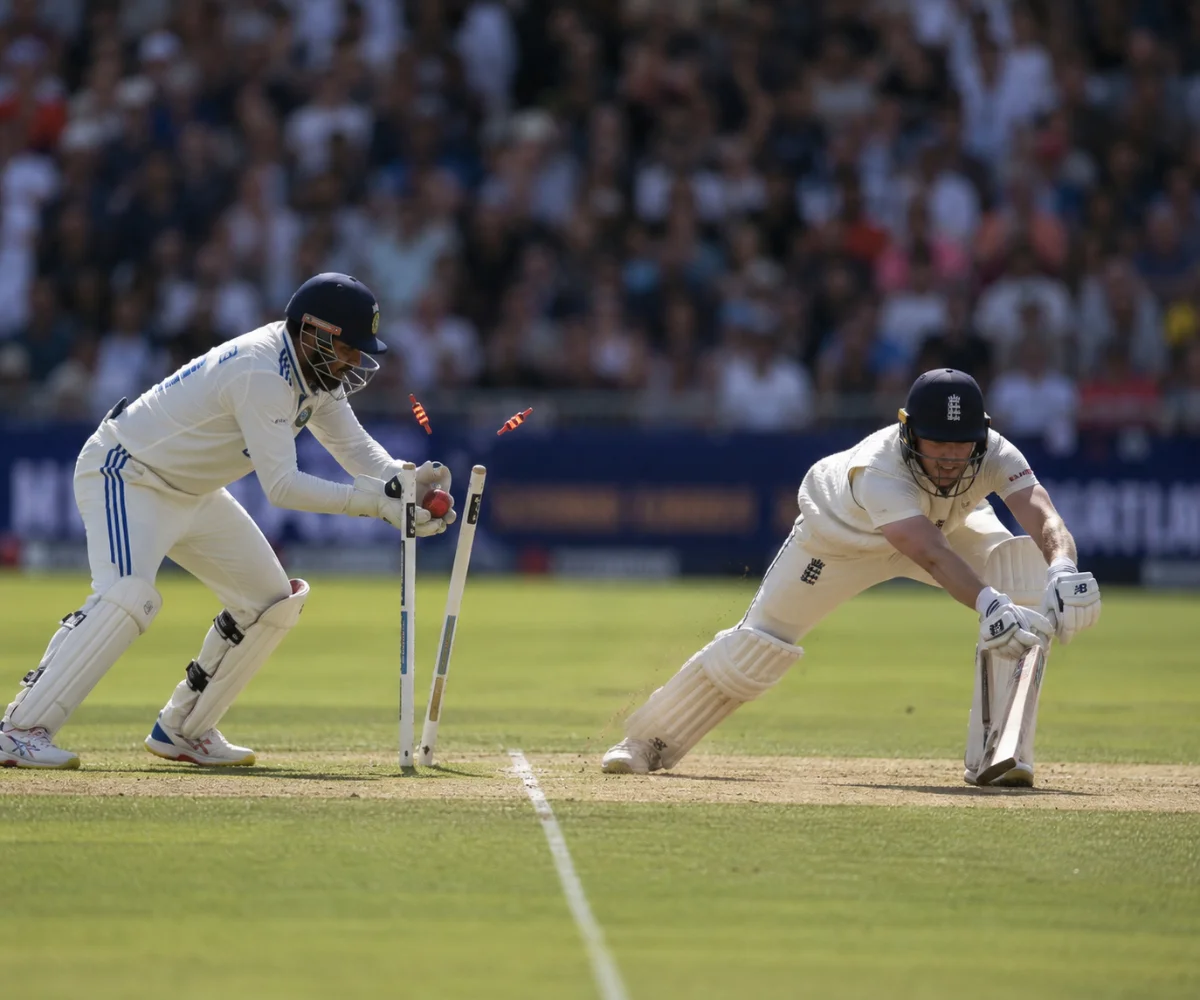
Many beginners feel confused when they watch cricket and see a batsman get out in a way that does not make sense. You might see a player step forward, miss the ball, and suddenly he is given out. At that moment, most people think, “He didn’t run and he didn’t hit the ball, so why is he out?” This confusion is very common, especially for viewers in countries where cricket is not a traditional sport. Because of this, many people struggle to follow the game and lose interest.
The confusion usually comes from not understanding two simple things: the crease and the wicketkeeper’s role. Once you understand these, the stumping rule becomes very easy. Everything is explained step by step in simple words, so you can clearly understand what is happening during a stumping and watch cricket with confidence.
- A batsman is out stumped when he is outside the crease and not attempting a run.
- Only the wicketkeeper can perform a stumping.
- Stumping usually happens when the batsman misses the ball.
- Stumping is allowed on a wide ball but not on a no-ball.
- If the batsman tries to run, it becomes run out, not stumping.
What Is Stumping in Cricket?
Stumping is a way to get a batsman out in cricket. It happens when the wicketkeeper removes the bails while the batsman is outside the crease and not trying to run.
This usually happens when the batsman steps forward to hit the ball but misses it.
Simple Explanation (Step-by-Step)
- The bowler delivers the ball.
- The batsman steps out of the crease.
- The batsman misses the ball.
- The wicketkeeper collects the ball.
- The wicketkeeper removes the bails quickly.
- The batsman is out if he is outside the crease.
Quick Rules of Stumping
- The batsman must be outside the crease
- The batsman must NOT be attempting a run
- The wicketkeeper must break the stumps
- The ball must be a legal delivery
- The umpire confirms the decision
According to the official Laws of Cricket (Law 39), this is called stumping.
When Is a Batsman Out Stumped? (Clear Breakdown)
A batsman is out stumped when:
- He moves outside the crease
- He misses or does not control the ball
- The wicketkeeper collects the ball cleanly
- The keeper removes the bails quickly
- The batsman is still outside the crease
Even if the ball slightly touches the bat, it can still be stumping as long as the batsman is not trying to run.
If the batsman tries to run, it becomes run out, not stumping.
What Is the Crease in Cricket? (Beginner Friendly)
The crease is a line in front of the stumps. It is the batsman’s safe area.
- If the batsman’s foot is inside the crease → he is safe
- If the foot is outside or in the air → he can be out
This is the most important concept to understand stumping.
How Stumping Happens in a Real Match
A common situation:
- A spinner bowls the ball
- The batsman steps forward to hit a big shot
- He misses the ball
- The wicketkeeper catches it quickly
- The keeper removes the bails
This is the most common stumping scenario.
Can You Be Stumped on a Wide or No-Ball?
- You cannot be stumped on a no-ball
- You CAN be stumped on a wide ball
A wide ball is still a valid delivery, but a no-ball gives extra protection.
On a no-ball, the batsman can still be run out.
Difference Between Stumping and Run Out
| Factor | Stumping | Run Out |
|---|---|---|
| Who removes bails | Wicketkeeper only | Any fielder |
| Attempting a run | No | Yes |
| Ball contact with bat | May or may not happen | May or may not happen |
| Common situation | Spinner bowling | Any situation |
If the batsman is running, it is run out. If not, it is stumping.
Role of the Wicketkeeper in Stumping
The wicketkeeper must:
- Stay alert
- Watch the ball closely
- Catch the ball cleanly
- Remove the bails quickly
Good wicketkeepers react very fast.
Common Stumping Situations
- Batsman stepping out to hit
- Missing a spin delivery
- Losing balance
- Foot in the air
All of these can lead to stumping.
Why Do Batsmen Get Stumped?
- Thinking stumping and run out are the same
- Not understanding what the crease is
- Believing the batsman must miss the ball completely
- Not knowing the wide ball rule
- Poor footwork
- Misjudging spin
- Trying big shots
- Overconfidence
These mistakes create stumping chances.
Common Mistakes and Edge Cases
- Foot in the air → out
- Keeper drops ball → not out
- Inside crease → safe
- Running → run out
How Umpires Decide a Stumping
Umpires check:
- Foot position
- Ground contact
- Timing of bails
They use slow motion and technology like LED stumps.
Why Stumping Is Important in Cricket
- Helps spinners take wickets
- Creates pressure
- Can change matches
History of Stumping
Stumping has existed for many years. As cricket improved, wicketkeeping became more advanced. Today, technology supports better decisions.
Records
Some wicketkeepers are famous for fast stumpings. Players like MS Dhoni are known for quick hands and sharp reactions. In England, names like Jos Buttler, Ben Foakes, and Sarah Taylor are also known for sharp wicketkeeping. For USA cricket fans, Monank Patel is a good modern example of a wicketkeeper-batter.
Common Questions About Stumping
What is the difference between a stumping and a run out?
Stumping: keeper breaks stumps.
Run out: any fielder can do it.
What is stumping in simple words?
It is when the wicketkeeper gets a batsman out outside the crease.
Can a batsman be stumped on a no-ball?
No, but he can be run out.
Can a batsman be stumped on a wide ball?
Yes, because it is a valid delivery.
Who can perform a stumping?
Only the wicketkeeper.
Conclusion
At first, the stumping rule may seem confusing, especially when it happens quickly in a live match. Many beginners do not understand why the batsman is out, and this can make the game harder to enjoy. However, once you understand the crease, the role of the wicketkeeper, and the key rule about not attempting a run, everything becomes simple.
From real match analysis and practical understanding, stumping is a smart and skill-based dismissal that depends on timing, awareness, and teamwork between the bowler and wicketkeeper. Now, when you watch cricket, you will not feel confused. Instead, you will understand the situation clearly and enjoy the game with confidence.
