




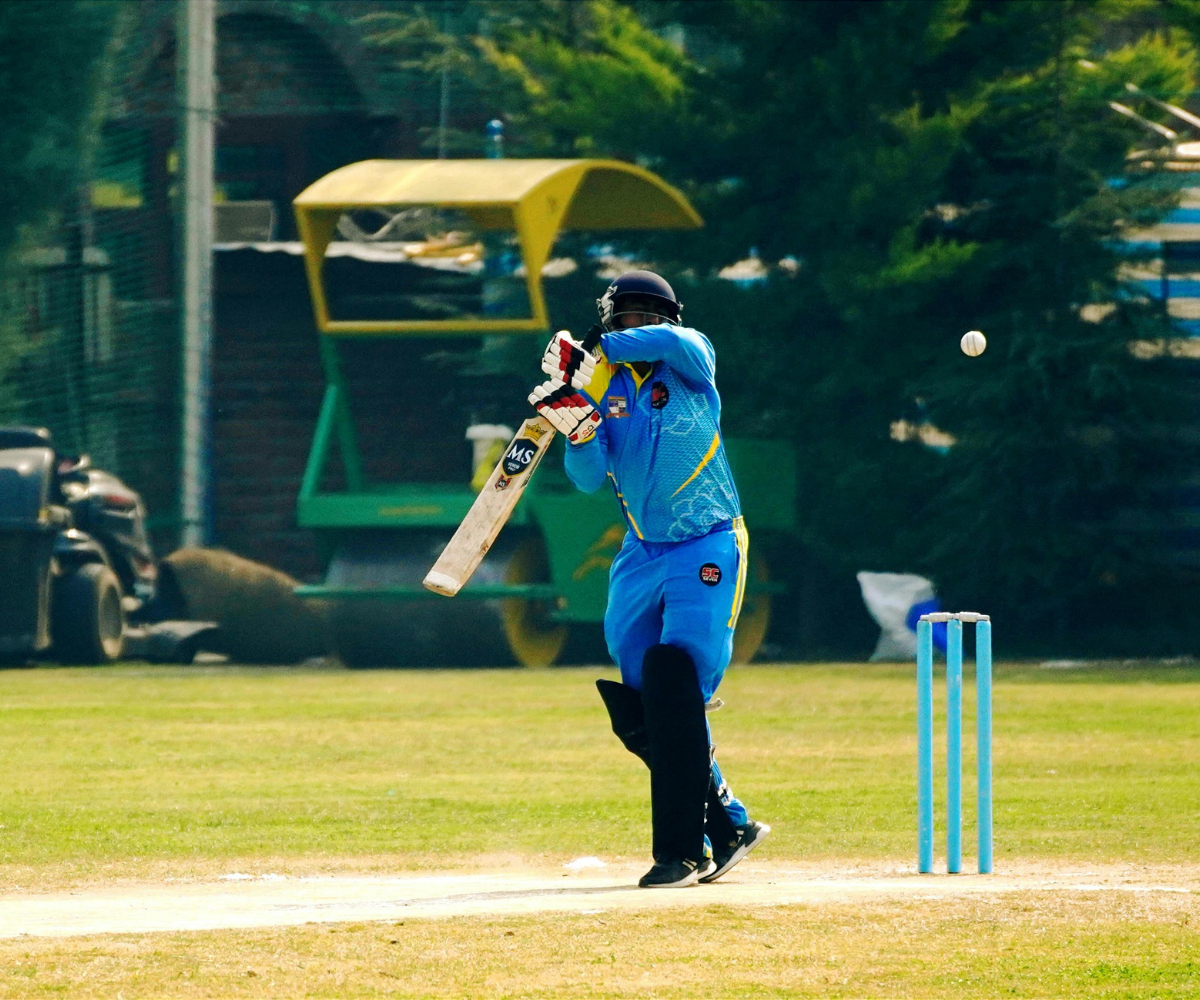
The powerplay rules in ODI and T20 cricket can feel confusing when you watch a match for the first time. Most fielders suddenly stand inside a marked circle. Batters begin playing attacking shots, and commentators talk about making the most of the powerplay. However, they may not explain how many overs it lasts or why the field must change. If you are still learning the game, our cricket rules for beginners section can help you understand the basic laws.
Most confusion comes from mixing ODI and T20 rules. The formats use different powerplay periods. Shortened matches can also change the number of powerplay balls. This guide explains each rule in simple words, with tables and examples, so you can follow the opening overs with confidence.
Powerplay Rules: Short Answer
Powerplay is a phase of limited-overs cricket with stricter fielding limits. In a standard ODI, a maximum of 2 fielders can be outside the 30-yard circle in overs 1–10, 4 in overs 11–40, and 5 in overs 41–50. In T20 cricket, only 2 fielders can be outside during the first 6 overs.
Key Takeaways
- ODI Powerplay 1: Overs 1–10, maximum 2 fielders outside.
- ODI Powerplay 2: Overs 11–40, maximum 4 fielders outside.
- ODI Powerplay 3: Overs 41–50, maximum 5 fielders outside.
- T20 powerplay: First 6 overs, maximum 2 fielders outside.
- Shortened T20 powerplays may end partway through an over.
- Breaking a fielding restriction results in a no-ball.
What Is Powerplay in Cricket?
Powerplay is a period in limited-overs cricket when the fielding team must keep more players inside the 30-yard circle. Only a set number of fielders can stand outside the circle at the moment the bowler delivers the ball.
This creates open spaces near the boundary. Therefore, batters often try to score quickly. However, attacking shots also create chances for catches and early wickets.
How Does Powerplay Work?
- The innings begins with strict fielding limits.
- Most fielders remain inside the 30-yard circle.
- Batters try to use the open boundary areas.
- Bowlers try to take wickets while the ball is new.
- The fielding limits change when the next phase begins.
Powerplay Rules at a Glance
| Format | Overs or Phase | Maximum Fielders Outside Circle |
|---|---|---|
| ODI | Overs 1–10 | 2 fielders |
| ODI | Overs 11–40 | 4 fielders |
| ODI | Overs 41–50 | 5 fielders |
| T20 | Overs 1–6 | 2 fielders |
| T20 | Overs 7–20 | 5 fielders |
Powerplay Timeline in ODI Cricket
Powerplay Rules in ODI Cricket
An uninterrupted ODI innings has three fielding-restriction phases. For a broader background on the rule and its history, read Powerplay Rules in ODI Cricket.
Powerplay 1: Overs 1–10
During the first 10 overs, a maximum of 2 fielders can stand outside the 30-yard circle. This is usually the most attacking phase for the batting team.
However, the new ball may swing during these overs. Therefore, bowlers also have a strong chance to take early wickets.
Powerplay 2: Overs 11–40
During overs 11 to 40, a maximum of 4 fielders can stand outside the circle. The fielding captain gets more boundary protection, but cannot place every fielder deep.
Batters often rotate the strike during this phase. Bowlers may use spin, slower balls, and defensive field placements.
Powerplay 3: Overs 41–50
During the final 10 overs, a maximum of 5 fielders can stand outside the circle. This gives the fielding team its greatest boundary protection.
Even so, batting teams usually attack because few balls remain in the innings.
Important ODI Note
If an ODI innings is shortened by rain or another delay, the length of all three phases is adjusted according to the number of overs available.
Powerplay Rules in T20 Cricket
In a standard 20-over T20 innings, the powerplay lasts for the first 6 overs. During these overs, only 2 fielders can stand outside the 30-yard circle.
From the start of the seventh over, a maximum of 5 fielders can stand outside. This gives the bowling team more protection near the boundary.
Most international and standard T20 matches follow this structure. However, some domestic competitions use special variations. Therefore, the exact playing conditions should be checked for that competition.
Powerplay in a Shortened T20 Match
When rain or another delay reduces a T20 innings, the powerplay is also reduced. Under the updated method, it may finish after a specific ball instead of at the end of a complete over.
Important: Cricket notation is not decimal notation. For example, 1.3 overs means 1 over and 3 balls, which equals 9 legal balls.
| Total Overs in Innings | Powerplay Length | Powerplay Balls |
|---|---|---|
| 5 overs | 1.3 overs | 9 balls |
| 6 overs | 1.5 overs | 11 balls |
| 7 overs | 2.1 overs | 13 balls |
| 8 overs | 2.2 overs | 14 balls |
| 9 overs | 2.4 overs | 16 balls |
| 10 overs | 3 overs | 18 balls |
Simple Example
A 5-over innings contains 30 balls. The powerplay lasts for 9 balls. Therefore, the field can spread after the third ball of the second over.
ODI vs T20 Powerplay Rules
| Feature | ODI | T20 |
|---|---|---|
| Normal innings length | 50 overs | 20 overs |
| Opening powerplay | First 10 overs | First 6 overs |
| Fielders outside at start | Maximum 2 | Maximum 2 |
| Middle phase | Maximum 4 outside | Maximum 5 outside after over 6 |
| Final phase | Maximum 5 outside | Maximum 5 outside |
| Common batting approach | Attack with some control | More aggressive from the start |
What Is the 30-Yard Circle?
The 30-yard circle is a marked area around the cricket pitch. It is formed by two semi-circles, with straight lines joining them on both sides of the pitch.
During the powerplay, most fielders must remain inside this area. Only the allowed number can stand in the deeper outfield.
What Happens If Too Many Fielders Are Outside?
If the fielding team has more than the permitted number of fielders outside the circle when the ball is delivered, the umpire calls and signals a no-ball.
The batting team receives the no-ball run. The delivery also does not count as one of the six legal balls in the over.
Does Test Cricket Have a Powerplay?
No. Test cricket does not use powerplay phases or the same limited-overs fielding restrictions.
The captain can usually spread the field more freely, subject to the general laws governing fielder placement.
Why Does Powerplay Exist?
Powerplay stops the fielding team from placing too many players near the boundary during important phases of a limited-overs innings.
This encourages attacking batting. At the same time, it gives bowlers a chance to take wickets because batters may play riskier shots.
Before and After the T20 Powerplay
| Feature | During Powerplay | After Powerplay |
|---|---|---|
| Fielders outside circle | Maximum 2 | Maximum 5 |
| Open boundary areas | More open spaces | More boundary protection |
| Batting approach | Usually more aggressive | More controlled or matchup-based |
| Bowling aim | Early wickets and accuracy | Control runs and use variations |
How Powerplay Affects the Match
A good powerplay can give a team early momentum. Quick runs reduce the pressure on later batters. Keeping wickets in hand also creates more attacking options near the end.
On the other hand, losing several wickets can slow the innings. These changes are easier to follow when you understand the basic cricket scoring system, including runs, wickets, overs, and run rate.
Wickets in Powerplay: Risk vs Reward
Batters see more open boundary areas during the powerplay. Therefore, they may try lofted shots or hard drives.
However, this attacking approach creates risk. A mistimed shot may go to a close fielder, while movement from the new ball can produce catches behind the wicket.
Powerplay Batting Strategy
- Look for gaps inside and outside the circle.
- Attack loose balls instead of every delivery.
- Use the pace of the new ball.
- Rotate the strike when boundaries are not available.
- Protect wickets while maintaining a useful scoring rate.
Powerplay Bowling Strategy
- Bowl a consistent line and length.
- Use early swing or seam movement.
- Place catching fielders where edges may travel.
- Avoid easy width and full tosses.
- Change pace when the batter begins attacking.
Key Point
The strongest powerplays are not always the ones with the most boundaries. A batting team also needs to protect wickets, while the bowling team must balance attacking fields with boundary control.
Simple Powerplay Match Example
Suppose a T20 team scores 48 runs and loses no wickets in the first 6 overs. It has gained a useful start and still has all its wickets available.
Now suppose another team scores 50 runs but loses four wickets. The score is slightly higher, but the remaining batters may need to play more carefully. This shows why runs and wickets must be judged together.
Common Powerplay Mistakes Beginners Make
- Thinking every fielding phase in ODI has the same restriction.
- Believing powerplay means batters must attack every ball.
- Reading 1.3 overs as a decimal instead of 1 over and 3 balls.
- Thinking all T20 leagues use exactly the same variation.
- Ignoring the importance of early wickets.
- Believing Test cricket also has a powerplay.
Frequently Asked Questions
How is powerplay calculated in a shortened T20I?
It is adjusted according to the total number of balls available in the innings. The duration is rounded to the nearest ball.
How long is the powerplay in a 5-over T20 match?
The powerplay lasts for 9 legal balls. In cricket notation, this is written as 1.3 overs.
Is the current powerplay fair for bowlers?
Some fans believe it favors batting because only two fielders can stay outside early. Others feel the new ball and attacking shots still give bowlers wicket chances.
Should three fielders be allowed outside during powerplay?
Some viewers believe this would create a better balance between batting and bowling. However, it is not the standard current ICC powerplay rule.
Do very short formats such as T10 need a powerplay?
This is debated because the whole innings is already short and aggressive. The final rule depends on the playing conditions of each competition.
Conclusion
Powerplay is one of the most important parts of limited-overs cricket because it shapes field placement, scoring speed, and early wicket chances. The easiest way to understand powerplay is to remember the numbers first: ODI uses limits of 2, 4, and 5 fielders across its three phases, while a standard T20 allows only 2 fielders outside during the first 6 overs. Once these numbers are clear, you can better understand why captains change the field, why batters attack, and why bowlers value early wickets.
Powerplay does not guarantee fast runs or easy batting. It creates an opportunity that both teams must manage carefully. When you watch your next ODI or T20 match, follow the fielders outside the circle and notice how the strategy changes when the powerplay ends. This small detail will help you read the match with much more confidence.
Read More: What is Beamer Ball in Cricket? Is a beamer illegal in cricket?
Rule note: Powerplay details may vary in special domestic competitions or shortened matches. Always check the playing conditions used for that match.
