




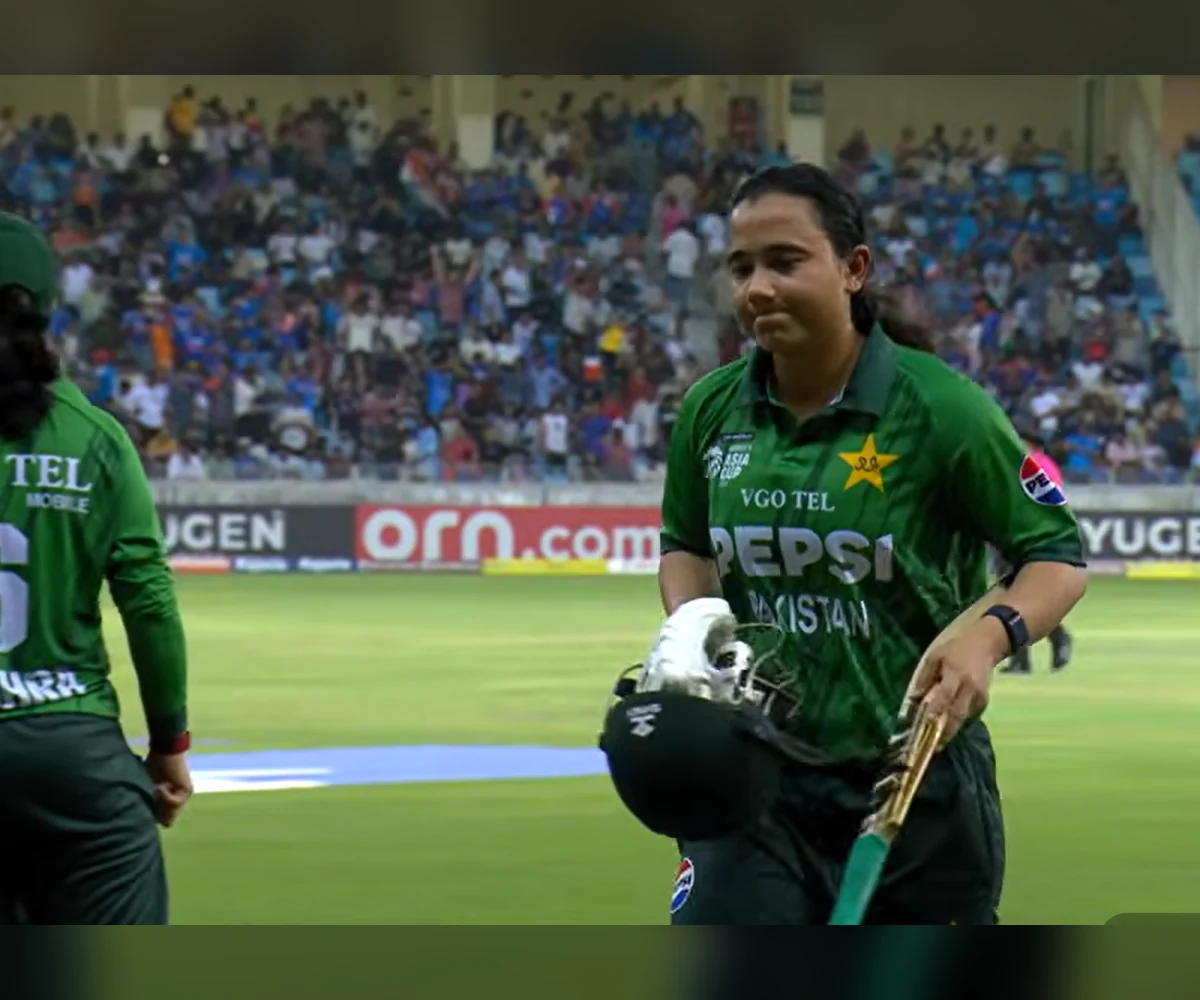
Pakistan Women made a steady start against India Women in Dubai, but the match changed in only a few overs. They moved to 27 without loss before losing six wickets for eight runs. The innings never recovered.
For a new cricket fan, the key was not one bad shot or one great ball. It was a chain reaction. India introduced spin, stopped easy runs, and took wickets in a cluster. This match analysis is part of our beginner cricket competition coverage.
Featured image: Pakistan Women’s team at the 2009 Women’s World Cup. Photo by paddynapper via Wikimedia Commons, licensed under CC BY-SA 2.0. Cropped and resized.
Quick Answer
Pakistan Women were bowled out for 55 because they could not adjust after India turned to spin. Their opening pair reached 27, but the score quickly fell to 35 for 6. Nine of Pakistan’s 11 batters finished in single figures.
India’s spin bowlers took all nine wickets credited to bowlers. Shree Charani and Prema Rawat took three each, Deepti Sharma took two, and part-time off-spinner Shafali Verma took one. The other wicket was a run-out. India then reached 57 for 3 in 8.4 overs to win by seven wickets.
India Women vs Pakistan Women: Match at a Glance
| Match detail | Result |
|---|---|
| Tournament | Women’s Asia Cup 2026 |
| Date | September 5, 2026 |
| Venue | Dubai International Cricket Stadium |
| Toss | Pakistan Women chose to bat |
| Pakistan Women | 55 all out in 18.1 overs |
| India Women | 57 for 3 in 8.4 overs |
| Result | India Women won by seven wickets |
| Player of the Match | Shree Charani, 3 for 7 |
The official ICC match report confirmed that 55 was Pakistan Women’s lowest total in T20 international cricket.
How Did Pakistan’s Batting Collapse Begin?
Pakistan’s opening pair gave the innings a reasonable start. Muneeba Ali and Shawaal Zulfiqar took the score to 27 without losing a wicket.
That start included missed chances from India. Pakistan therefore had an opportunity to build a competitive total. Instead, the first wicket opened the door for a rapid collapse.
Shafali Verma bowled Muneeba for 13 at 27 for 1. In the next over, Shree Charani dismissed Gull Feroza for 0 and Shawaal Zulfiqar for 14. Pakistan had suddenly slipped to 29 for 3.
- 27 for 0 after 4.2 overs
- 29 for 3 after 6 overs
- 35 for 5 after 9 overs
- 35 for 6 after 9.1 overs
- 55 all out after 18.1 overs
Pakistan lost six wickets while adding only eight runs. That was the decisive period of the match.
Why Did Pakistan Women Score Only 55?
1. India’s Spinners Changed the Match
India used four spin bowlers, and each one contributed.
Shafali Verma made the first breakthrough with her off-spin. Shree Charani then attacked the right-handed batters with accurate left-arm spin. Prema Rawat’s leg-spin removed three lower-order batters, while Deepti Sharma used her experience to take two wickets for only five runs.
Together, Charani, Rawat, and Deepti took eight wickets for 21 runs. Shafali added the other bowler’s wicket. Pakistan had no clear way to rotate the strike or force the spinners away from their plans.
For beginners, spin bowling uses slower pace and more turn than fast bowling. The lower speed does not make it easy. A batter must read the ball’s direction, length, and amount of turn before choosing a shot.
2. Wickets Fell Too Close Together
One wicket can be managed. Several wickets in a short period create a different problem.
Every new batter needs time to understand the pitch and bowling. Pakistan kept sending new players into a situation where India already had control. There was no settled batter at one end to slow the collapse.
The most damaging sequence came between 4.3 and 9.1 overs. Pakistan lost six batters in 29 balls. During that period, the team added only eight runs.
3. The Middle Order Could Not Build a Partnership
Muneeba Ali made 13 and Shawaal Zulfiqar made 14. They were the only Pakistan batters to reach double figures.
After the opening stand of 27, the next partnership to reach double figures added only 10 runs. No middle-order pair stayed together long enough to rebuild the innings.
A recovery partnership does not need quick boundaries. Two batters can begin with singles, safe shots, and clear communication. Pakistan needed that calm phase after losing early wickets, but it never arrived.
4. Too Many Batters Were Stuck
Pakistan completed its innings at a run rate of 3.03 runs per over. In T20 cricket, that scoring pace gives the bowling team room to attack.
Nine Pakistan batters finished in single figures. Three dismissed batters made ducks, while Sadia Iqbal was not out on zero. Only six fours were hit, and Pakistan did not hit a six.
When boundaries disappear, batters must keep the score moving with singles and twos. India’s field and accurate spin produced too many dot balls, which add no run to the team score. The pressure grew with every quiet over.
5. Pakistan Could Not Use Its Batting Depth
Pakistan batted for 18.1 overs, so the problem was not only a lack of time. The team still had 11 legal balls available when the final wicket fell.
The lower order tried to survive, but survival alone could not produce a defendable total. Tuba Hassan made 9 from 16 balls and Umm-e-Hani made 6 from 18. Their time at the crease slowed the fall of wickets, but it did not create a meaningful recovery.
Was the Dubai Pitch Responsible for the Low Score?
The surface helped disciplined spin bowling, but it was not impossible for batting.
India also lost three early wickets. Fatima Sana dismissed Shafali Verma, Pratika Rawal, and Smriti Mandhana inside four overs. That showed there was some help for Pakistan’s bowling attack.
However, Harmanpreet Kaur and Deepti Sharma stayed calm. They added an unbeaten 28 and completed the chase in 8.4 overs. India’s response showed that a batter could score by defending good balls and attacking safer opportunities.
The pitch influenced the game, but Pakistan’s cluster of wickets was the bigger reason for 55.
How India Completed the Chase
India needed only 56 runs, but Pakistan captain Fatima Sana gave her team a brief chance. She took three wickets for 17 runs and reduced India to 29 for 3.
Shafali Verma had started the chase with a six, but Sana removed her for 12. Pratika Rawal made 4, and Smriti Mandhana made 9.
Harmanpreet Kaur finished on 18 not out, while Deepti Sharma made 12 not out. Their partnership removed any remaining risk. India won with 68 balls unused.
This was an important contrast between the teams. Pakistan could not stop the collapse after losing its first wicket. India lost three early wickets but then formed a stable partnership.
What Can Pakistan Learn From This Defeat?
Protect the First Six Overs
Pakistan scored 29 runs in the six-over T20 powerplay, but it also lost three wickets. A reasonable scoring rate has less value when several top-order batters are already out.
Create a Plan Against Spin
The batters need more than one scoring option. Using the crease, playing straight, sweeping selected balls, and taking singles can make it harder for a spinner to settle.
Stop a Collapse Before Attacking Again
After two quick wickets, the next pair should first reduce risk. A short partnership can change the rhythm of the innings. Attack can return once both batters understand the conditions.
Support the Captain’s Bowling Effort
Fatima Sana’s three wickets showed that Pakistan could create chances with the ball. A total closer to 100 would at least have allowed the bowlers to apply scoreboard pressure. A target of 56 offered almost no margin for error.
What Did the Result Mean for the Women’s Asia Cup?
India remained unbeaten and secured first place in Group A. The win also protected India’s strong net run rate because the chase ended with 68 balls remaining.
Pakistan’s final group match was scheduled against Hong Kong, China, on September 7. A win would secure Pakistan’s place in the knockout stage. The result against India therefore hurt, but it did not automatically end Pakistan’s tournament.
Fans who are new to the event can read our guide to what the Asia Cup is and how its formats work. The men’s and women’s tournaments have separate teams, records, and structures.
Common Confusions About the Match
Pakistan did not lose because it ran out of overs
The team was all out in 18.1 overs. Its final wicket ended the innings before the full 20 overs were completed.
All 10 wickets were not taken by bowlers
India’s bowlers took nine wickets. Eyman Fatima was run out, which is recorded as a fielding dismissal rather than a wicket for the bowler.
India also had a top-order problem
India lost three wickets for 29. The difference was that Harmanpreet and Deepti stopped the slide and finished the chase.
A low total can affect net run rate
A heavy defeat can reduce a team’s net run rate, which may matter when teams finish level on points. Read our explanation of how net run rate is calculated for a simple example.
Frequently Asked Questions
Was 55 Pakistan Women’s lowest T20I score?
Yes. The ICC confirmed that 55 was Pakistan Women’s lowest total in T20 international cricket.
Who took the most wickets for India?
Shree Charani and Prema Rawat took three wickets each. Charani conceded seven runs, while Rawat conceded nine. Charani was named Player of the Match.
Why did Pakistan choose to bat first?
Captain Fatima Sana said Pakistan expected a fresh pitch and wanted to set the highest total possible before using its strong bowling attack. The plan failed because the batting lineup collapsed against spin.
Did Pakistan bowl well against India?
Fatima Sana bowled well and took all three Indian wickets. However, the target was too small for Pakistan to defend once Harmanpreet Kaur and Deepti Sharma settled.
Can Pakistan still qualify after losing to India?
Yes. After this match, Pakistan still had a group game against Hong Kong, China, on September 7. A win would secure its place in the knockout stage.
Conclusion
Pakistan Women were bowled out for 55 because a promising opening stand turned into a rapid collapse against spin. The score moved from 27 for 0 to 35 for 6, and no middle-order partnership repaired the damage. India’s bowlers stayed accurate, removed scoring options, and kept sending new batters into a high-pressure situation. Pakistan’s bowling showed fight through Fatima Sana, but a target of 56 was too small to defend. The clearest lesson is simple: against strong spin, a team must rotate the strike, protect partnerships, and stop one wicket from becoming several.
