




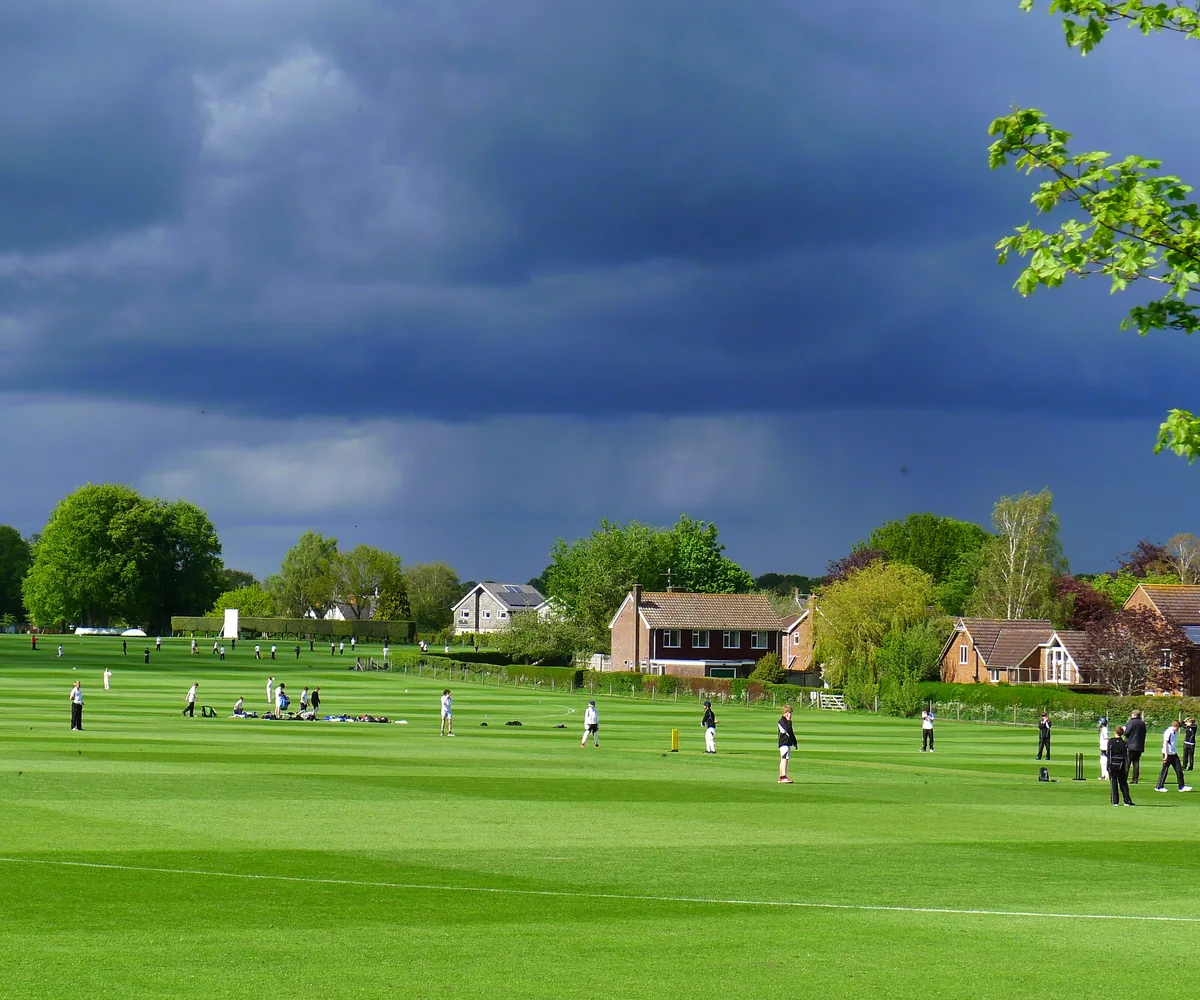
Ask a new player which part of cricket they want to play and you usually get an uncertain answer. The four jobs in a cricket team get named and argued about constantly, yet the Laws of Cricket never hand one to anybody. Nobody is born a wicketkeeper.
What you can do instead of guessing is understand what each job asks of your hands, your eyes and your attention. If you want the full picture first, our guide to cricket teams and roles covers what each job does across a whole match, and this one picks up with the part beginners find hardest: working out which job is yours.
Quick Answer
No law assigns you a cricket role, and no law tells you which one to pick. Your captain and coach choose the eleven, so your job is to learn what each of the four jobs demands, practise the one you enjoy most, and stay competent enough in all four to be useful when the team needs you somewhere else.
Who Actually Decides Your Role
This is the part that surprises most new players. Your role is not yours to pick on match day.
Law 1.1 of the Laws of Cricket says a match is played between two sides, each of eleven players, one of whom is the captain. It also allows both sides to agree to play with fewer or more than eleven, but never more than eleven players fielding at the same time. So a match side is exactly eleven, and those eleven are chosen.
Law 1.2.1 makes the choosing process formal. Each captain nominates their players in writing to one of the umpires before the toss. Law 1.2.2 then closes the door on casual changes: no player may be replaced after the nomination without the consent of the opposing captain. That consent is a legal requirement, not a courtesy.
Club and school teams also carry a squad larger than eleven, which is how a player can be left out of a particular match without being released. Law 1.3.3 limits one thing here, and it is worth knowing. After the nomination, only a nominated player may act as a deputy for the captain. Law 1.4 puts the weight on both captains, who are responsible at all times for making sure play stays within the Spirit of Cricket as well as within the Laws.
Read that back and the answer to “which role is mine” becomes clear. The Laws do not assign roles. A captain and coach do, out of the players available, for a particular match.
Important
A role and a position are two different things, and beginners often mix them up. A role is a job: batter, bowler, wicketkeeper, or fielder. A position is a named spot on the field, such as slip, cover, or mid-on. Laws 28.4 and 28.5 talk about where a fielder may stand, not about which job the fielder does. You always have one of the four roles, and while you are in the field you also stand at a position, and the captain can change your position between overs.
The Four Jobs a Side Has to Fill
Every side covering eleven fielders has to cover the same four jobs. The names are worth learning precisely, because coaches use them constantly.
| Job | How many per side | What the job involves |
|---|---|---|
| Batter | Two at a time on the field | Facing the ball, scoring runs, and staying in while the partnership lasts |
| Bowler | One at a time, in rotation | Delivering the ball legally and trying to dismiss the batter |
| Wicketkeeper | One per side | Receiving every delivery behind the stumps, and the only player who can stump |
| Fielder | Everyone else on the field | Catching, stopping the ball, returning it, backing up, and running out batters |
Notice that fielding is not a fifth job to add to the list. Every player on the field who is not batting, keeping, or currently holding the ball counts as a fielder. The same player is a fielder most of the innings and a bowler every time they take the ball, which is why “which role am I” is a harder question than it first looks.
What Each Job Asks of You
Here is where the Laws do real work. Each of the four jobs carries its own legal demands, and those demands describe the job better than any label.
Batting asks you to be ready for anything
When you are batting, the whole fielding side is on the field with you, and every delivery is a new problem you have not seen before. There is no legal requirement to face a particular type of ball or to play a particular shot. The Laws place no condition on how you must stand beyond the crease and the bat, and no condition on which shot you attempt.
That freedom is the hardest part. A batter is judged on decisions they made a fraction of a second earlier, and the job rewards a player who can repeat a small number of movements under pressure. It suits someone who likes clear, self-contained challenges and who can reset quickly after a mistake.
Bowling asks you to repeat one action precisely
Bowling is the one job in cricket with named technical faults written into the Laws, and that tells you a great deal about what the job requires. Law 21.2 sets the test for the arm. For a delivery to be fair in respect of the arm, the ball must not be thrown, and once the bowler’s arm has reached shoulder level in the delivery swing, the elbow must not be straightened either partly or completely until the ball has left the hand. Law 21.5 sets the test for the feet: the back foot must land within and not touching the return crease, and the front foot must land on the correct side of the line joining the two middle stumps and not beyond it. Breach either and the umpire calls No ball.
Law 21.3 adds the umpire’s side of it. Once the bowler has entered the delivery stride, if an umpire decides the ball was thrown or delivered underarm, that umpire calls and signals No ball and, once the ball is dead, tells the other umpire why. The bowler’s end umpire warns the bowler that this is a first and final warning.
Then there is the rotation. Law 17.6 allows a bowler to change ends as often as they like, provided they do not bowl two overs consecutively, nor parts of each of two consecutive overs, in the same innings. So a bowler’s match is built from short, repeated, high-precision bursts, with a rest built into the law itself.
If you are new and want to feel the difference a clean action makes, this Cricket Australia coaching session is worth the five minutes. The coach walks through a seam and wrist position drill, then shows how to slow the action down and bowl at a target, which is exactly how a beginner should practise accuracy before speed.
Bowling suits someone who enjoys repeating something until it feels automatic, and who can stay calm after a bad delivery, because a No ball is a routine event rather than a crisis.
Wicketkeeping is its own skill, not a variation on batting
The Laws treat the wicketkeeper separately, and the equipment rules show it immediately. Law 27.1 makes the wicketkeeper the only fielder permitted to wear gloves and external leg guards. It adds a condition: if the umpires judge from the keeper’s actions and positioning that they will not be unable to carry out the normal duties of a wicketkeeper, the keeper forfeits that right for the rest of the innings. Wearing the equipment is not a free pass, because the gloves only count while you are actually keeping.
Law 27.3.1 sets the position. The wicketkeeper must remain wholly behind the wicket at the striker’s end from the moment the ball comes into play until a delivery touches the striker’s bat or person, passes the wicket, or the striker attempts a run. Law 27.4.1 then limits movement, treating it as unfair for the keeper to significantly alter position in relation to the striker’s wicket after the ball is in play, with narrow exceptions such as a few paces forward for a slower delivery.
Keeping is also the only job with a dismissal of its own. Law 39.1.1 puts a batter out Stumped when a delivered ball that is not called No ball finds them out of their ground and they have not attempted a run, and their wicket is fairly put down by the wicketkeeper. Law 39.2 explains what counts as the wicketkeeper putting it down: the ball rebounding onto the stumps from any part of the keeper’s person or equipment, or the ball being kicked or thrown onto the stumps by the keeper.
Because the keeper handles every single delivery, this job suits someone who likes being the busiest player on the field and who stays composed when the whole match happens twenty metres in front of them.
Fielding asks you to react and throw, bare handed
Law 28.1 draws a hard line on equipment. No fielder other than the wicketkeeper may wear gloves or external leg guards. Protection for the hand or fingers may be worn only with the consent of the umpires. So every other fielder takes the ball with bare hands, and the hands are the part of you that has to be in the right place.
Law 28.5 controls where a fielder may stand while the ball is live. While the ball is in play, and until it has made contact with the striker’s bat or person, or has passed the striker’s bat, no fielder other than the bowler may have any part of their person grounded on or extended over the pitch. If a fielder breaks that, the bowler’s end umpire calls and signals No ball.
Law 28.4 limits how crowded the close field can get. At the instant of the bowler’s delivery, there must not be more than two fielders, other than the wicketkeeper, behind the popping crease on the on side. A fielder counts as behind that crease unless the whole of their person, whether grounded or in the air, is in front of the line. Breaching it and the striker’s end umpire calls No ball.
Those three laws describe the job accurately: ready on your feet, reacting to a ball struck at high speed, and throwing it back quickly enough to matter. Our cricket basics and rules page covers the surrounding rules a new player runs into, so it is a good companion read once these four jobs start making sense.
Questions Worth Asking Yourself
These are not rules. They are prompts that make the conversation with a coach shorter, and each one is tied to something the Laws above actually describe.
- Do you enjoy waiting, or would you rather be the one starting the action? The bowler starts every delivery. Everyone else reacts to one.
- Do you prefer one hard problem repeated, or a fresh problem every few seconds? Bowling is repetition under a fixed technique. Batting is a new decision on every ball. Fielding is a new reaction every time, and the keeper has both at once.
- How do you feel about playing with equipment on your hands? Under Law 28.1 the keeper is the only fielder who wears gloves, so if you want padded protection in the field, the keeper’s job is the one place it is allowed.
- Do you enjoy the ball coming at you, or sending it away from you? This sounds obvious, and it is the question new players answer fastest and most honestly.
- Can you keep going after a mistake, in front of everyone? All four jobs are public. Law 17.6 guarantees bowlers rest; nothing in the Laws gives anyone else a break from being watched.
If your answers point two or three different ways, that is a useful result rather than a problem. It means you have not settled yet, which is exactly where a new player should be.
What to Practise in the First Few Months
For a beginner the most useful habit is to practise all four jobs in rotation, then let one of them become the main event. Four things are worth the time.
For batting: work on a stance and grip that feel repeatable, and on picking the ball up early out of the pitch. You need these before any shot. Start with defending, then add a single attacking stroke you can actually land.
For bowling: pick one length, bowl it two hundred times, and aim at a target on the ground rather than at a batter. Law 21.2 and Law 21.5 are both about a repeatable action, so accuracy practice is the direct answer to those laws. You can do this in a driveway with a ball and a set of stumps or a chalk target.
For keeping: start on receiving standing up, close to the stumps, with a soft hands position. Law 27.4.1 allows a few paces forward for a slower delivery, so moving up to take the ball is legitimate, while wandering is not.
For fielding: throw to a target at short range before you throw at distance. The job is about the first five metres, and Law 28.1 means your bare hands have to be right. Practise catching balls thrown softly first, then harder.
Over a few months the job you keep coming back to will make itself obvious. Trust that pattern more than any test you can read online.
How to Tell Your Coach What You Want
Coaches hear a vague request and have nothing to act on. A specific one saves everyone time. Three sentences do most of the work.
- Say which job you want to be picked for, using one of the four names.
- Say what you have been practising on your own, with a number attached, because “I have been working on my grip” means less than “I have bowled two hundred at a target three times a week”.
- Say what you are still weak at, so the coach knows where to help rather than where to test you.
Then accept the first answer you get. You may be told to field for a season while you work on your bowling, and that is a normal outcome, not a verdict. A nomination is made per match under Law 1.2.1, and the eleven can change every week. Playing one job while you develop another is how most players end up with two useful roles instead of one weak one.
Frequently Asked Questions
Can I change my role during a season?
Yes. Teams nominate their players for each match, and Law 1.2.1 requires that nomination in writing to an umpire before the toss, so the eleven can be different every week. Law 1.2.2 only restricts replacing a player once nominated, and that needs the opposing captain’s consent. Your club or school selects the squad, not the Laws, so ask the coach who does it.
Do I have to choose a role before I start playing?
No, and for a beginner it is the better advice to start without a label. Law 1.1 requires each side to be eleven players filling the same four jobs, so a new player who can do two of them is more useful than one who can only do one. Many players settle into a main job once they have tried all four properly.
Is wicketkeeping harder than batting for a beginner?
The Laws treat it as a separate job with its own rules rather than a harder version of batting. Law 27.1 makes the keeper the only fielder allowed gloves and external leg guards, and takes that right away if the keeper cannot perform the normal duties. Law 27.3.1 requires the keeper to stay wholly behind the wicket, and Law 39.1.1 makes stumping the one dismissal only the keeper can make. The keeper also handles every delivery, so it is a different skill with more repetition, not a bigger one.
What if I am good at two things?
Then you are what teams call an all-rounder, and that is a real and valued job rather than a half-measure. Law 1.1 asks each side for eleven players with one captain and imposes no limit on how many of those players bat or bowl. Covering two of the four jobs in the same match is a genuine strength, and captains select for the match in front of them.
Does my age or the format change the answer?
The format can blur the jobs, and the Laws allow it. Law 1.1 permits sides of fewer than eleven players by agreement, which is common for younger players and short-sided games. With fewer players, one person often covers fielding and keeping, or bowls and keeps, so a beginner may try all four jobs in a single innings. That is a format effect, not a shortcut, and it is a good reason to keep practising all four.
Conclusion
No law will tell you which cricket job is yours, and any article that claims otherwise is guessing. What the Laws do give you is a fair description of each job: batting is a fresh decision every ball, bowling is one precise repeated action with named faults, keeping is a distinct skill with its own equipment and position rules, and fielding is bare-handed reaction and throwing. Learn what each one demands, practise the one you keep enjoying, stay useful in all four, and let a coach make the selection. If you want the wider basics around all of this, the Cricket Skills section is the sensible next place to look.
Read More: cricket skills every beginner should work on
