




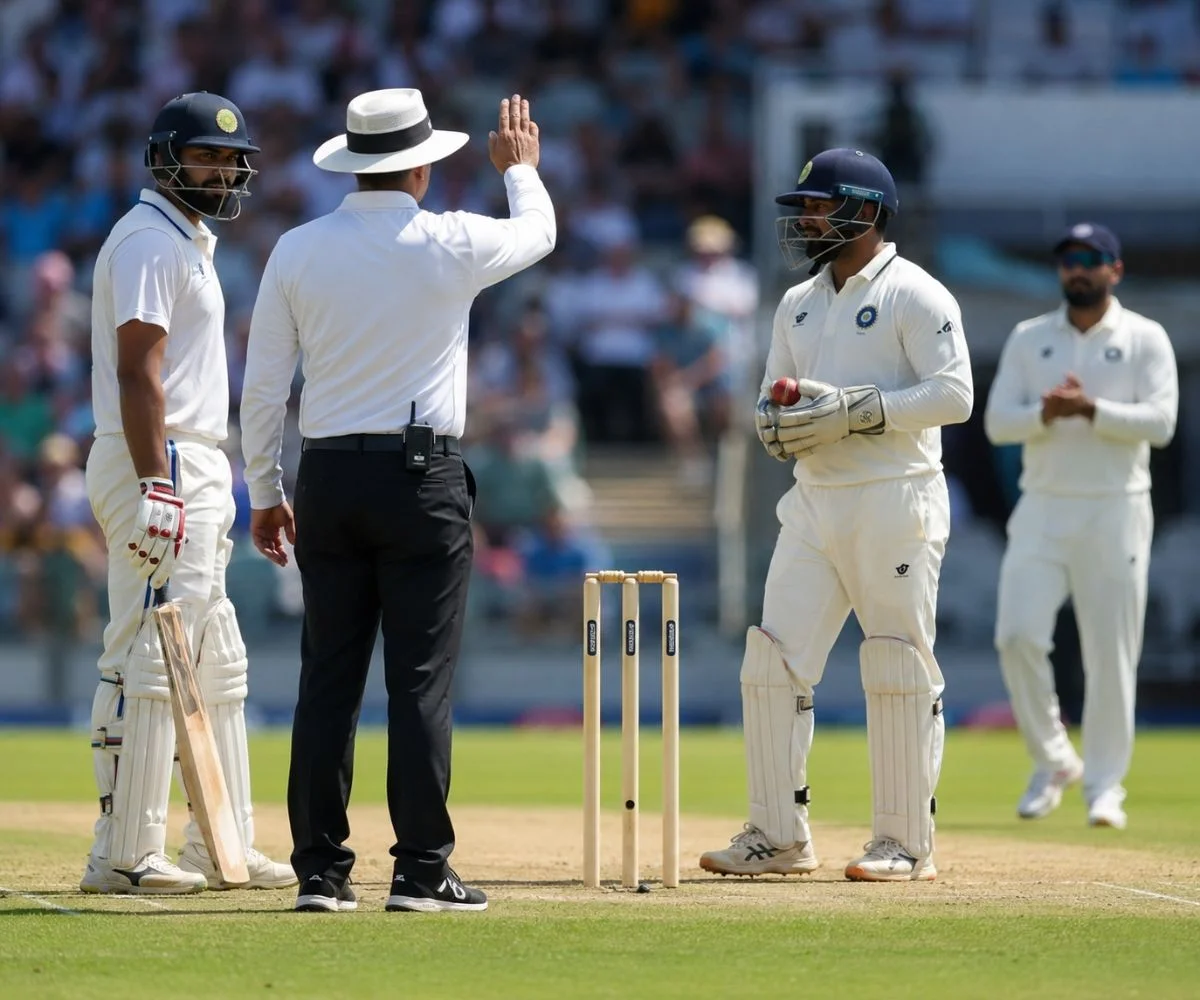
Many cricket fans feel confused when the umpire suddenly stops play and calls a dead ball. You may have seen players running between wickets, but the runs did not count. Or a batter looked clearly out, but the decision was not given. These moments feel strange and frustrating, especially when you are trying to understand the game but the rules are not clear.
The dead ball rule creates confusion even among regular viewers. Most websites explain it in technical language, which does not help during a live match. That is why this guide is written in a simple and practical way, based on real scenarios and official rules, so you can clearly understand when a ball becomes dead and why the umpire makes that decision.
What Is a Dead Ball in Cricket?
Quick Takeaway: Dead Ball Rule in Simple Words
- Dead ball means the ball is not in play
- No runs can be scored after dead ball
- No batter can be given out after dead ball
- The umpire can call dead ball anytime if needed
- The ball also becomes dead when play naturally ends
A dead ball means the ball is no longer in play.
When the ball is dead:
- No runs can be scored
- No batter can be given out
- The delivery is finished
Simple idea:
When the action stops, the ball is dead.
According to MCC Law 20 (Official Rule)
Official Rule Insight
According to MCC Law 20, the ball becomes dead when play is complete, the umpire calls it, the ball is finally settled, or no further action is possible.
According to MCC (Marylebone Cricket Club) Law 20, the ball becomes dead in multiple situations such as:
- When play is complete
- When the umpire calls “Dead ball”
- When the ball is finally settled
- When no further play is possible
This rule helps keep the game fair and controlled.
When Does a Ball Become Dead? (Step-by-Step)
1. After the Play Is Complete
The ball becomes dead when the action naturally ends.
Examples:
- A batter is dismissed
- A boundary is fully completed
- Fielders stop trying to play
No further action = dead ball
2. When the Ball Is Finally Settled
This is an important rule.
The ball is dead when:
- It is fully controlled by bowler or wicketkeeper
- Players stop attempting runs
- The play clearly ends
3. When the Umpire Calls Dead Ball
The umpire can stop play anytime.
Situations:
- Player injury
- Distraction or interference
- Unfair play
- Bowler stops mid-delivery
Once called, it is final.
4. Dead Ball Before Delivery
Sometimes the ball becomes dead even before it is bowled.
Examples:
- Batter is not ready
- Bowler stops in run-up
- Umpire cancels the delivery
Why Did the Umpire Call Dead Ball? (Real Match Confusion Explained)
Dead Ball Timing Table
| Situation | Before Dead Ball | After Dead Ball |
|---|---|---|
| Runs | Can count | Do not count |
| Dismissal | Can be valid | Not valid |
| Player actions | Part of live play | Ignored |
This is the most common question users search.
Umpires call dead ball when:
- Something unexpected happens
- Play cannot continue fairly
- Players are not ready
- Safety is at risk
Simple understanding:
If the situation becomes unfair or unsafe, the umpire stops the game.
Common Situations When Dead Ball Is Called
Ball Hits Object on Ground
If the ball hits a helmet or object, play stops.
Serious Distraction
Noise or interruption causes the umpire to stop play.
Player Injury
Safety comes first. The ball becomes dead immediately.
Ball Lodged or Lost
If the ball gets stuck or cannot be played, it is dead.
What Happens If Players Continue After Dead Ball? (Timing Confusion)
This is where most people get confused.
If players run after dead ball:
- Runs will NOT count
If dismissal happens after dead ball:
- Player is NOT OUT
But if action happens BEFORE the call:
- It is valid
Key idea:
Timing decides everything.
Can You Score Runs on a Dead Ball?
No.
- Runs do not count
- Running is ignored
Even if players keep running, it has no value.
Can a Player Be Out on a Dead Ball?
No.
A player cannot be dismissed after the ball becomes dead.
Only actions before the call matter.
Does Dead Ball Count in the Over?
It depends.
- If delivery was completed → may count
- If stopped early → does not count
The umpire decides this.
Can a Dead Ball Be Reversed?
No.
Once called, it cannot be changed.
This keeps decisions fair.
Umpire Signal for Dead Ball
When the umpire calls dead ball:
- He says “Dead ball”
- Spreads both arms horizontally
This clearly shows play has stopped.
Dead Ball vs No Ball vs Wide Ball
| Rule | Ball in Play? | Runs Count? | Can Player Be Out? |
|---|---|---|---|
| Dead Ball | No | No | No |
| No Ball | Yes | Yes | Limited dismissals |
| Wide Ball | Yes | Yes | Rare dismissals |
Dead ball fully stops the game.
Ball Flow in Cricket (Easy Visual Understanding)
To understand better, think like this:
Ball delivered → Players act → Play ends → Dead ball
Every delivery follows this cycle.
Common Mistakes About Dead Ball Rule
Common Mistakes vs Reality
| Common Mistake | Reality |
|---|---|
| Dead ball and no ball are the same | They are different rules |
| Runs can count after dead ball | Runs do not count after dead ball |
| The umpire cannot stop play anytime | The umpire has the authority to call dead ball when needed |
Why Do Umpires Use Dead Ball Rule?
The purpose is:
- To keep the game fair
- To ensure safety
- To handle unexpected situations
It helps control the match.
Real Match Examples
Example 1:
Bowler runs in, batter steps away
Dead ball called
Example 2:
Ball reaches boundary
Play ends → Dead ball
Example 3:
Ball stuck in clothing
Dead ball
Common Match Confusions Explained
- Batter runs after dead ball: the runs do not count.
- Catch taken after dead ball: the batter is not out.
- Bowler stops mid-run: the umpire may call dead ball.
- Ball hits an object on the field: play may stop and dead ball can be called.
Quick Summary
- Dead ball means ball is not in play
- No runs can be scored
- No player can be out
- Umpire can call it anytime
- It happens when play ends or stops
- It cannot be reversed
FAQs
Does cricket need more precise dead ball rules?
The current rule gives umpires some discretion because every match situation is different. MCC could add clearer examples, but a completely fixed rule may be difficult because the ball becomes dead when both teams clearly stop treating it as live.
When is a ball dead in cricket?
When play ends, the umpire calls it, or no further action is possible.
Can players run after a dead ball?
Yes, but runs do not count.
Who decides dead ball?
The umpire has full authority.
Does dead ball count in over?
Sometimes yes, sometimes no.
Conclusion
The dead ball rule becomes easy once you understand the timing behind it. Most confusion happens because people focus on what they see instead of when the action actually ends. In cricket, timing decides everything, whether runs count or a player is out. If you remember one simple idea, it will help you in every match: when the action stops, the ball is dead. This rule exists to keep the game fair, safe, and controlled, and once you understand it, these decisions will start making sense in real match situations.
Read More : What is the no ball in cricket rules?
