




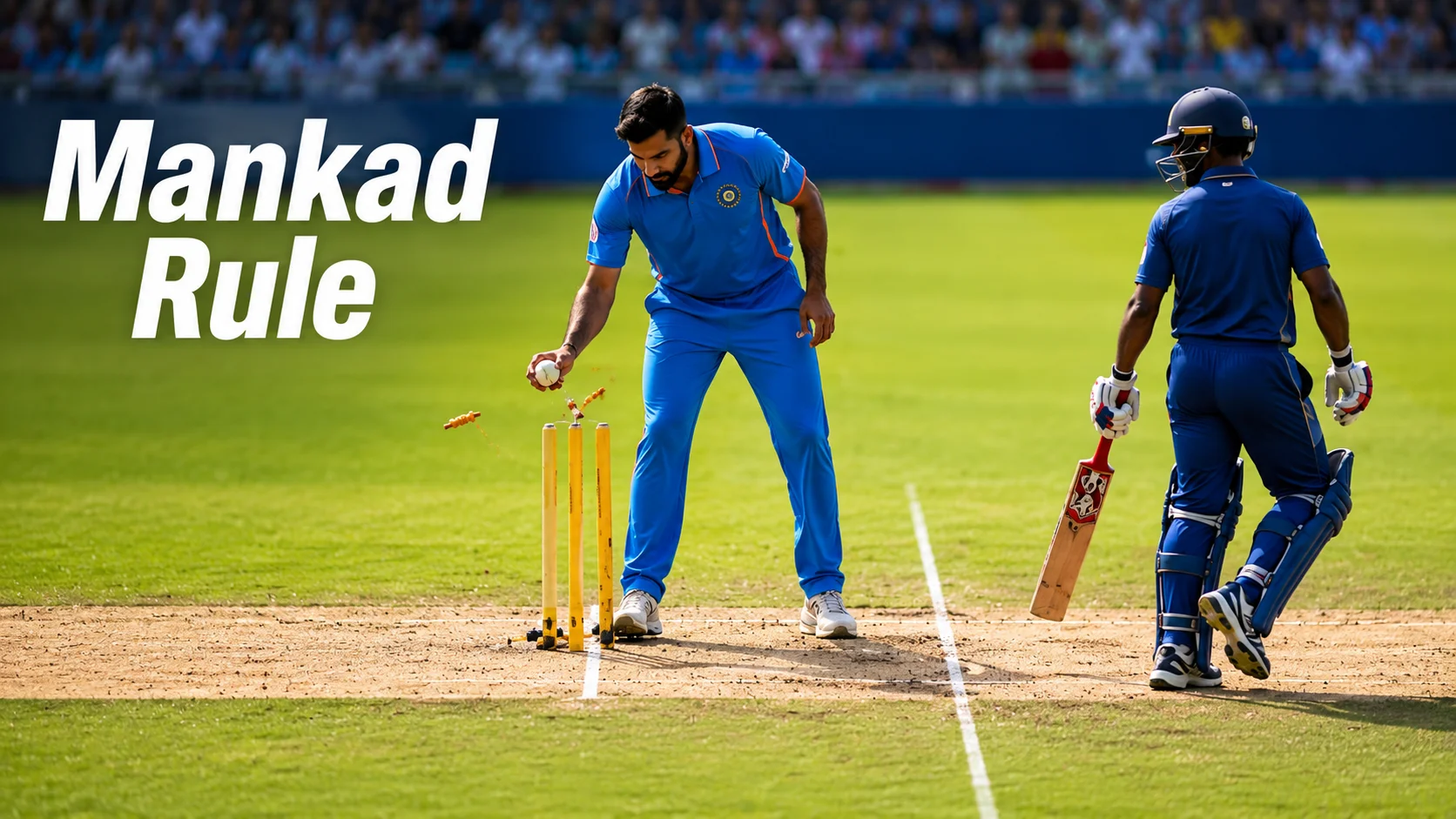
Many people feel confused when they first see a Mankad dismissal. You might be watching a match and suddenly a batter is given out without even facing the ball. It looks strange. It can feel unfair. Some fans even think it is cheating. Many beginners get frustrated at this moment because they cannot understand what just happened, and it takes away their interest in the game.
The official rules from the International Cricket Council make one thing clear. The confusion is not because the rule is wrong, but because it is not explained in a simple way. Once you break the cricket rules down step by step, it becomes easy to understand and even logical. The Mankad rule is explained below in the simplest way, so you can understand it without confusion.
Quick Takeaways: Mankad Rule Explained
- Mankad is a legal run-out under Law 38.
- It happens when the non-striker leaves the crease early.
- The bowler can break the stumps before releasing the ball.
- No warning is required by official cricket laws.
- The rule is controversial because of the sportsmanship debate.
What Is Mankading in Cricket?
Mankading is a type of run out in cricket. It happens when the bowler runs out the non-striker before delivering the ball.
In simple terms:
- The non-striker leaves the crease early (this is called backing up)
- The bowler stops before releasing the ball
- The bowler breaks the stumps
- The batter is given out
Definition: Mankad is a type of run out where the bowler dismisses the non-striker for leaving the crease early before the ball is delivered.
Beginner Explanation: Non-Striker and Crease
If you are new to cricket, this is the easiest way to understand it:
- Non-striker: The batter standing near the bowler
- Crease: The safe line a batter must stay inside
Think of it like baseball. If a runner leaves the base too early, they can be caught out. The same idea applies here.
Why Is It Called Mankad?
The name comes from Vinoo Mankad.
He ran out a batter in this way during a match against Australia. He followed the rules, but the incident created debate. Over time, this dismissal became known as Mankading.
Is Mankad Legal or Cheating?
This is the most common question.
Clear answer:
Mankading is completely legal.
According to the International Cricket Council:
- It is part of official cricket laws
- It falls under run out
- No warning is required
However, some players choose to warn the batter as a sign of sportsmanship. This is optional.
How Mankad Works Step-by-Step
How Mankad Happens: Quick Flow
Run-up → Non-striker leaves crease early → Bowler stops before release → Bowler breaks the stumps → Fielding side appeals → Umpire gives decision
Here is the simplest way to understand what happens:
- The bowler starts the run-up
- The non-striker leaves the crease early
- The bowler stops before releasing the ball
- The bowler breaks the stumps
- The fielding team appeals
- The umpire gives the decision
If the batter is outside the crease at that moment, they are out.
When Is Mankad NOT Allowed?
The batter is not out if:
- The bowler has already released the ball
- The non-striker is inside the crease
- The timing is incorrect
Timing is very important in this rule.
Mankad vs Run Out (Key Difference)
| Situation | Mankad | Run Out |
|---|---|---|
| Timing | Before delivery | During play |
| Player Out | Non-striker | Any batter |
| Ball Status | Not released | Ball in play |
| Common Situation | Backing up too early | Trying to complete a run |
Noteworthy Incidents in Cricket History
There have been many famous Mankad dismissals in cricket. These moments often go viral and create strong reactions from fans.
Why Is It Controversial?
Spirit of cricket and sportsmanship
Many fans feel the bowler should warn the batter first.
Emotional reactions
It looks unfair to new viewers.
Changing mindset
More players now accept it as part of the game.
Arguments For and Against
Arguments for:
- It follows official rules
- Prevents unfair advantage
- Rewards alert players
Arguments against:
- Feels unsporting
- Seen as a trick
- Creates tension
Common Mistakes People Make
- Thinking Mankad is cheating.
- Believing a warning is required.
- Not understanding the timing rule.
- Confusing it with a normal run out.
How Umpires Handle Mankad Decisions
Umpires:
- Check timing
- Check batter position
- Use replay if needed
What This Means for Players and Fans
For players:
- Stay inside the crease
- Watch the bowler
For fans:
- Understand the rule
- Avoid confusion
Looking Forward: Does Mankad Have a Future?
Yes, the Mankad rule will remain part of cricket because it supports fair play.
FAQs
Is Mankad legal in cricket?
Yes, it is fully legal.
Does the bowler need to warn the batter?
No, warning is not required.
Why is Mankad controversial?
Because it feels unfair to some fans.
What is backing up in cricket?
It means leaving the crease early.
Conclusion
At first, the Mankad rule can feel unfair or confusing, and this reaction is common, especially from beginners who are new to cricket. When you watch it without understanding the rule, it looks like the bowler is doing something wrong. However, once you understand the timing, the law, and the reason behind it, the situation becomes much clearer.
Based on official cricket laws and real match analysis, the Mankad rule is fair and necessary because it prevents players from gaining an unfair advantage. Understanding this rule completely changes how you see the game. Instead of confusion, you begin to see the logic behind it, and that is when cricket becomes much easier and more enjoyable to watch.
Read More: Stumping Rule Explained: Simple Cricket Guide for Beginners
