




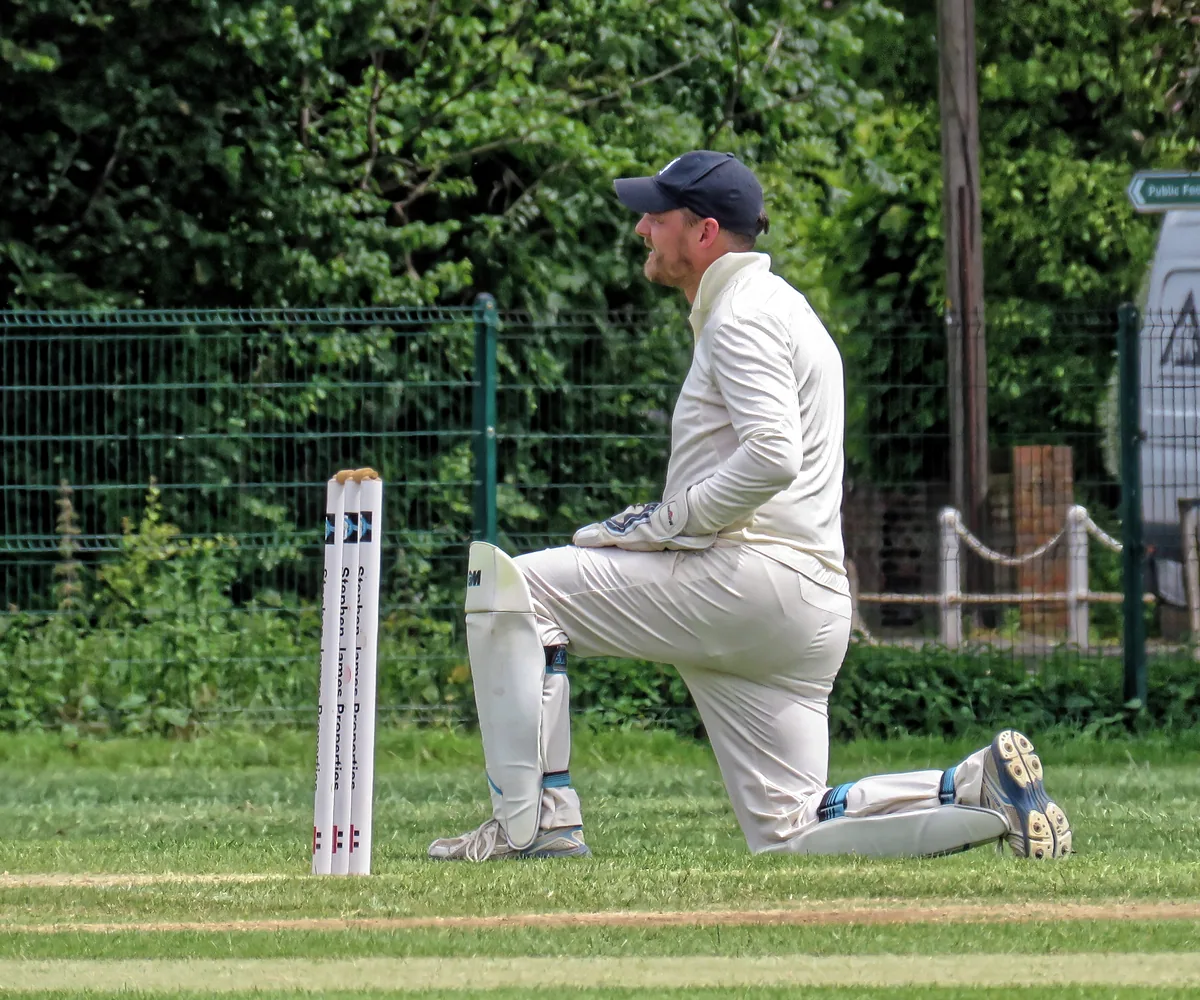
Cricket looks confusing from the outside because a side needs players who appear to be doing completely different things from one another. Some hit the ball, some throw it hard, and one stands behind the stumps wearing gloves. If you are still working through how the game works, our cricket basics and rules guide explains the scoring, the innings and the overs first.
This guide covers how a cricket team is put together, what each role actually does on the day, and why the same eleven players can be asked to do very different jobs depending on the format they are playing in.
Quick Answer
A cricket side fields eleven players at any one time, chosen from a squad that may be larger. Inside that eleven, every player is doing one or more of four jobs: batting, bowling, wicketkeeping and fielding. One of the eleven is named captain.
How Many Players Are in a Cricket Team?
Eleven. That is the number on the scorecard, and it comes from the Laws of Cricket rather than from each club’s own preference.
Law 1.1 states that a match is played between two sides of eleven players, one of whom is the captain. It then adds an important piece of flexibility: by agreement, a match may be played between sides of fewer than eleven, or more than eleven, but never more than eleven players may field at any time.
That is how a school side can field eight and still be playing cricket, and how a club can carry fourteen players through a tournament. The eleven is the limit on who is out on the field, not on how many players a club may register.
The same law covers accidents. If a side is reduced below the number of players it nominated, the match continues for as long as that is possible under the Laws or any agreements made before the toss. A team down to nine can still finish a game. A team that cannot field cannot.
Squad and Playing Eleven Are Not the Same Thing
The squad is the group of players a team has entered for a competition. The playing eleven, usually called the XI, is the eleven who actually take the field. The Laws do not set a squad size, so that number comes from the competition’s own playing conditions.
What the Laws do set is how the squad gets approved. Law 1.2.1 says each captain nominates their players in writing to one of the umpires before the toss. Law 1.2.2 says no player may be replaced after the nomination without the consent of the opposing captain.
| Term | What it means | Where it is decided |
|---|---|---|
| Squad | Every player entered for a competition or a series | The competition’s playing conditions |
| Playing eleven, or XI | The eleven players who field for the side | The Laws, under Law 1.1 |
| Nominated players | The names handed to an umpire before the toss | The captain, in writing, under Law 1.2.1 |
| Change of player | A replacement for a nominated player | Needs the opposing captain’s consent, under Law 1.2.2 |
Because a change of player needs the other side to agree, a coach cannot quietly send on a substitute when a game is going badly. The opposition gets a say in that decision.
Law 1.2.3 adds one detail that confuses newcomers. A replacement is treated as the same player as the person they replaced, so the two appear as a single career entry on the scorecard.
The Four Jobs Inside a Cricket Team
Roles are described in a lot of different ways, but underneath the naming there are only four jobs. Every player on the field is doing at least one of them, and most players do two.
| Job | Who does it | What it involves |
|---|---|---|
| Batting | Batters, batting in a fixed order from one to eleven | Scoring runs, keeping the strike, and deciding when to attack or defend |
| Bowling | Bowlers, split into pace and spin | Delivering the ball at the wicket and trying to get the batter out |
| Wicketkeeping | One wicketkeeper per side | Receiving the ball, keeping the stumps behind the batter, and making the stumping |
| Fielding | Everyone on the field for the rest of the time | Catching, stopping the ball, returning it quickly, backing up and running out batters |
Words like batter, bowler, all-rounder and wicketkeeper are labels for players, not four extra jobs. An all-rounder, for instance, both bats and bowls, so that one player covers two of the four jobs in the same match.
This ICC introduction to the sport shows all four jobs working together in one place. It follows a single delivery from the bowler to the batter, then shows the eleven fielders waiting for their catch, so you can see how the jobs fit together before reading about each one.
What Batters Do
Batters come in a batting order, which means positions one to eleven. The order decides who comes in when a wicket falls, and choosing it is one of the clearest statements a captain makes about a match.
The order usually falls into three bands, and beginners recognise the pattern faster once they see it named in the full cricket batting order guide.
- The openers come in first and start building. They are chosen for taking the first ball and being able to play a long time.
- The middle order comes in next. These batters are expected to be the stabilisers, the players who can rebuild an innings after a wicket falls, and often the ones who bat the longest.
- The lower order comes in near the end of the batting order. In limited-overs cricket these players are picked mainly for what they do in the field, and they may be all-rounders rather than specialist batters.
Every batter is also a fielder. When their side is not batting, they are out in the field taking part in all four jobs as the situation requires. That is why a lower-order batter is still a full member of the team rather than someone who only exists for the last ten minutes.
What Bowlers Do
Bowlers are the players whose job is to attack the wicket. They come in two broad kinds, and the difference is where the force comes from.
Pace bowlers deliver at speed, whether fast or medium. Some rely on swing, which is the ball moving sideways in the air, and some on seam movement off the pitch. Spinners rely on turning the ball as it bounces, and they are described by the way the ball turns, such as an off break or a leg break.
How much a bowler can bowl is set by the competition’s playing conditions rather than by the Laws, and the number of overs a side bowls is fixed by the format. A captain is also free to bowl the same bowler at any point in an innings, so bowling order is part of the tactic rather than a fixed rule.
A useful warning for beginners: bowling is the hardest skill in cricket to control. A bowler who overshadows, over-strides or releases the ball late is likely to be called no ball, and that is the most common frustration new players meet on a cricket field.
What the Wicketkeeper Does
The wicketkeeper stands behind the stumps at the striker’s end and receives the bowler’s deliveries. It is the most specialised fielding role in the game, and the Laws treat it differently from every other position.
Law 27.1 makes the wicketkeeper the only fielder permitted to wear gloves and external leg guards. If those are worn, they count as part of the keeper’s person for the purposes of Law 28.2 on fielding the ball. No other fielder may wear them at all, which is covered in the next section.
The same law sets a limit on how the equipment is used. If the umpires judge that the keeper’s actions and positioning show they cannot carry out the normal duties of a wicketkeeper, they lose the right to wear the gloves and to be treated as a wicketkeeper for several Laws at once.
Law 27.3 restricts where the keeper can stand. From the moment the ball comes into play, the wicketkeeper must remain wholly behind the wicket at the striker’s end until the ball touches the batter or their bat, passes the wicket, or the batter attempts a run. The keeper also has a separate rule about movement, in Law 27.4, which allows only a few paces forward for a slower ball and lateral movement in response to the direction of the delivery.
The stumping is the dismissal that belongs to the wicketkeeper alone. Law 39.1.1 requires that the batter is out of their ground and has not attempted a run when their wicket is fairly put down by the wicketkeeper without the intervention of another fielder. No other fielder can produce a stumping, and that is the difference between a stumping and a run out.
Important
Law numbers changed in the 2026 edition of the Laws. The wicketkeeper is now Law 27 and the fielder is Law 28, and many older guides, videos and result sites still use the previous numbering. If a source labels a wicketkeeper rule with a different number, check which edition it is working from before you rely on the citation.
What Fielders Do
Fielding covers everything that is not batting, bowling or keeping. It is less glamorous than the other jobs and decides a large share of the runs in a match, because a ball stopped in the field is a ball that never becomes a boundary.
There are four real fielding rules worth knowing as a beginner, and the rest is positioning convention.
- No gloves or leg guards. Law 28.1 says no fielder other than the wicketkeeper may wear gloves or external leg guards, and protection for the hand or fingers may only be worn with the consent of the umpires.
- No standing on the pitch. Law 28.5 says that while the ball is in play and until it has touched the batter or their bat, or has passed the batter’s bat, no fielder other than the bowler may have any part of their person grounded on or extended over the pitch.
- A limit behind the popping crease. Law 28.4 says that at the instant of the bowler’s delivery there must not be more than two fielders, other than the wicketkeeper, behind the popping crease on the on side. A breach is called no ball.
- No cheating with the ball. Law 28.2.1 allows a fielder to field the ball with any part of their person, but treating a fielded ball illegally, such as deliberately discarding a piece of equipment that then touches the ball, brings a dead ball and five penalty runs.
Where fielders stand is mostly a matter of convention, and a captain has a lot of freedom. Our guide to fielding positions explained covers the named positions and the off side versus leg side distinction, which is the first thing that makes the whole field make sense.
The Captain and the Deputy Captain
One of the eleven is the captain, which Law 1.1 requires as part of the team itself. The captain is not only the person making tactical decisions during the game. The Laws give the captain a specific set of formal duties.
Law 1.2.1 puts the first one before the toss, when the captain nominates the team in writing to an umpire. Law 1.3.1 covers what happens when the captain is unavailable, by providing that a deputy shall act instead. Law 1.3.3 tightens that: once the players have been nominated, only a nominated player may act as deputy, including at the toss.
Law 1.4 is the one that shapes how a match feels. It states that the captains are responsible at all times for ensuring that play is conducted within the Spirit of Cricket as well as within the Laws. The MCC Laws of Cricket on the players set out those captain’s duties in full, alongside the rules on nomination and deputies.
In practice this means the captain manages the field, the bowling changes and the batting order, and is also the person responsible for how the side behaves. That responsibility stays with the captain whether or not they made the decision in question.
How Roles Change Between Formats
The same players will be given different jobs depending on the format, because each competition format rewards different things. A bowler who is valuable in a Test match may bowl only a small share of a T20 innings, and a batter who blocks for an hour may never be picked for a short game.
| Format | What the team usually needs | What changes in the roles |
|---|---|---|
| Test match | A deep batting order and bowlers who can control an extended spell | Batters seven, eight, nine, ten and eleven are real wicket-taking options, and bowlers bowl a lot more |
| One-day game | A balance, with part-time bowling used to stretch the attack | The captain rotates more bowlers, and a spinner may bowl a large share of the innings |
| Short format | Four or five specialist bowlers and batters who score quickly | Fielding restrictions are tighter, batting is faster, and the keeper may be pushed up the order |
Playing conditions set the cap on how many overs each bowler may bowl, and that is why you see bowlers used in short spells in one-day and short-format cricket and asked to bowl long in a Test.
Common Cricket Role Words Explained
Commentary and team sheets use a lot of shorthand. These are the words beginners meet most often.
| Word | What it means |
|---|---|
| XI | The eleven players who field for a side |
| Opener | One of the two batters who come in first |
| Middle order | Batters four to seven, the stabilising core of the batting |
| Lower order | Batters eight to eleven, often picked mainly for their fielding |
| All-rounder | A player who both bats and bowls, so they cover two of the four jobs |
| Anchor | A batter whose job is to occupy the crease and score steadily rather than attack |
| Pinch hitter | A batter sent in to score quickly in a short-format game, rather than to build |
| Pace bowler | A bowler who delivers at speed, relying on swing or seam |
| Spinner | A bowler who relies on turning the ball off the pitch |
| Wicketkeeper | The fielder behind the stumps, the only one who may wear gloves and make a stumping |
Frequently Asked Questions
How many players are in a cricket team?
Eleven players field for each side. Law 1.1 allows a match to be played with fewer or more than eleven by agreement, but no more than eleven may be on the field at the same time. A club can enter a larger squad, because the squad list and the playing eleven are two different things.
What is the difference between a squad and the playing eleven?
The squad is every player entered for a competition, and the playing eleven, or XI, is the group of eleven who field. The Laws do not set a squad size, so that comes from the competition’s playing conditions. What the Laws do set is that each captain nominates the team in writing before the toss, under Law 1.2.1.
Can one player be both a batter and a bowler?
Yes, and that is common. A player who does both is called an all-rounder, and many club sides are built around two or three of them because they give a captain more options. The wicketkeeper is often an all-rounder too, and a lower-order batter is usually chosen for their fielding as much as their batting.
Is the wicketkeeper always a batter?
No. The two jobs are separate, and plenty of good wicketkeepers bat in the lower order or not at all. What is fixed by the Laws is the other way round: the wicketkeeper is the only fielder who may wear gloves and external leg guards, under Law 27.1, and the only one who can make a stumping, under Law 39.1.1.
Do fielders have to follow any rules?
Yes, a few real ones. Under Law 28.1 no fielder other than the wicketkeeper may wear gloves or external leg guards. Law 28.5 stops any fielder other than the bowler from standing on or over the pitch while the ball is in play, and Law 28.4 limits how many fielders may stand behind the popping crease on the on side.
Conclusion
Roles in cricket are easier once you separate the team list from the jobs. A side fields eleven players, drawn from a squad that the competition decides the size of. Inside that eleven, everyone bats, bowls, keeps or fields, and most do more than one of those. Knowing the four jobs and the batting order means you can pick up a scorecard and understand what the captain is trying to do.
For a new player, the practical advice is to be honest about which of the four jobs you are actually good at, and then work on a second one. Teams are built by pairs of jobs, not by specialists alone. For gear and what to expect at your first club, see our cricket culture and gear guide.
Read More: How a Cricket Match Works: Innings, Overs and the Flow of a Game
