




The Ranji Trophy can be confusing if you are new to Indian cricket. It is not a national-team event, an IPL tournament, or one trophy match. It is India's main domestic first-class cricket championship. Teams connected to state and regional cricket associations compete across a full season.
For a new fan in the United States, the easiest comparison is a national championship played below international level. The players represent domestic cricket associations and try to win a multi-day competition. This guide is part of the Cricket Focus competition guides, where major cricket events are explained in simple language.
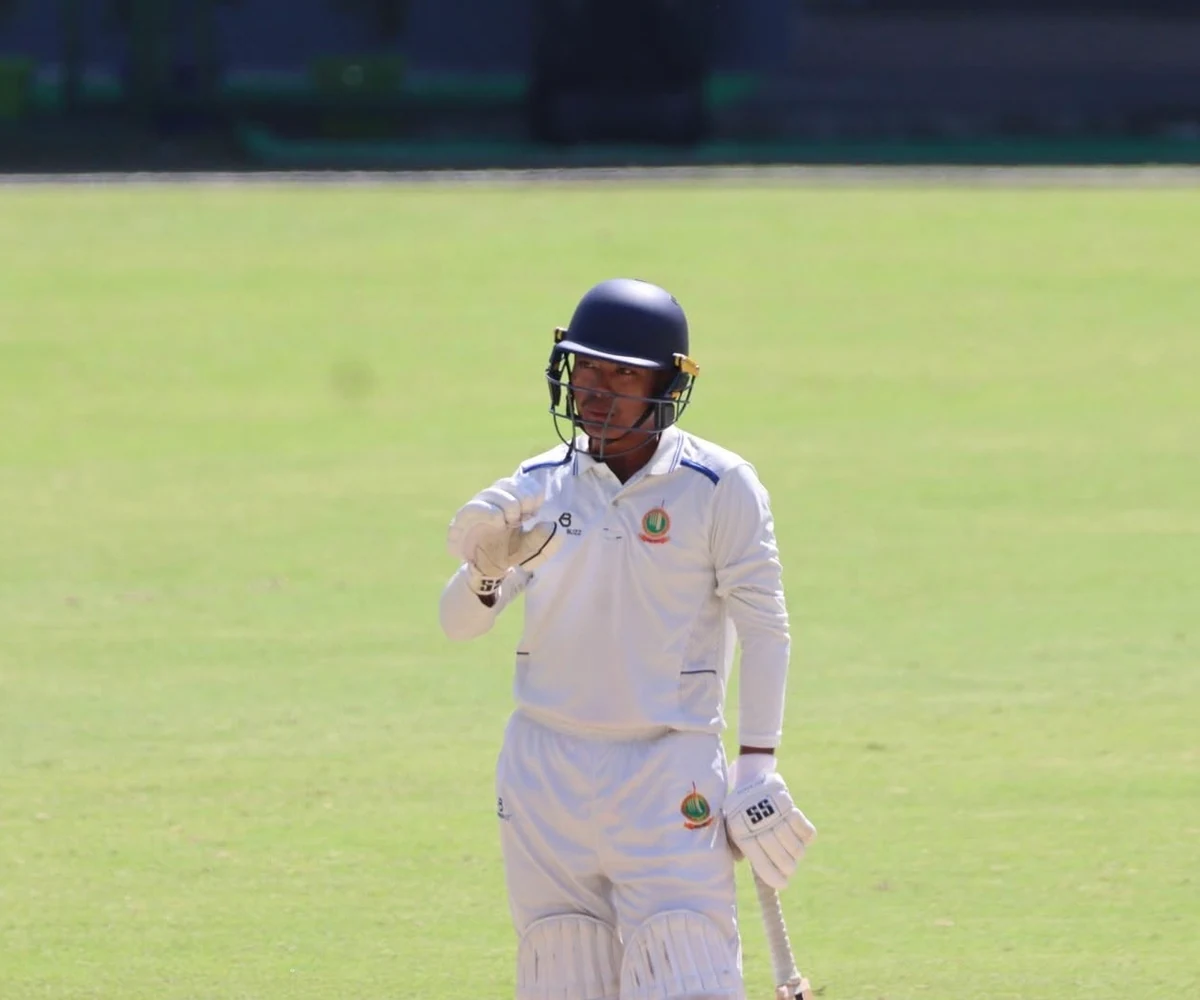
Featured photo: Neisilohaiba via Wikimedia Commons. Cropped and resized by Cricket Focus under the CC BY-SA 4.0 license.
Quick Answer
The Ranji Trophy is India's leading domestic first-class cricket tournament. It began in the 1934-35 season and is organized by the Board of Control for Cricket in India, known as the BCCI.
Teams usually play four-day league matches. The best Elite teams move into five-day knockout matches. Because a match can end in a draw, a first-innings lead is very important. It can earn extra points in the group stage and decide who advances in a drawn knockout.
Ranji Trophy at a Glance
| Question | Simple answer |
|---|---|
| What is it? | India's main domestic first-class cricket championship |
| Who organizes it? | BCCI |
| When did it begin? | 1934-35 season |
| Who plays? | Teams linked to Indian state and regional cricket associations |
| Is it international cricket? | No, it is domestic cricket within India |
| Match length | Usually four days in the league and five days in the knockouts |
| Main divisions | Elite and Plate |
| Latest completed champion | Jammu and Kashmir, 2025-26 |
| Most successful team | Mumbai, with 42 titles through 2025-26 |
What Is the Ranji Trophy?
The Ranji Trophy is a season-long red-ball cricket competition in India. It is the highest level of domestic first-class cricket in the country.
“Domestic” means the teams come from within one country's cricket system. “First-class” means the matches are officially recognized multi-day games played at a high standard. Each team can normally bat twice, so a side may have a first innings and a second innings.
This makes the Ranji Trophy very different from the Indian Premier League. The IPL uses the short Twenty20 format and city-based franchises. A Ranji match uses traditional red-ball cricket, white clothing, longer playing time, and tactics built around patience.
Players use the tournament to represent their association, help their team win a national title, and show that they can succeed in demanding multi-day cricket. Strong Ranji performances can also help a player enter the discussion for India A or the Indian Test team.
What Does First-Class Cricket Mean?
First-class cricket is the top recognized level of multi-day domestic cricket. A first-class match normally gives each team two innings and lasts at least three days. Ranji Trophy league matches are usually scheduled for four days.
An innings is one team's turn to bat. That turn ends when ten batters are out, the captain declares, or another rule ends the innings. The opposition then bats and tries to score more runs.
This format tests a wide range of skills:
- Batters must handle long spells and changing pitch conditions.
- Fast bowlers must manage their energy across several days.
- Spin bowlers may become more dangerous as the pitch wears.
- Captains must decide when to declare and how to use time.
- Teams must take 20 wickets to earn many outright wins.
A team can play very well without producing a quick result. That is why points and first-innings leads matter so much in the Ranji Trophy.
Who Plays in the Ranji Trophy?
Ranji Trophy teams are connected to cricket associations recognized by the BCCI. Many represent an Indian state, but not every team follows a simple one-state, one-team model.
For example, Mumbai and Vidarbha have their own teams even though both are associated with Maharashtra. Railways and Services also compete without representing a state in the usual way.
Players do not join these sides through an IPL-style auction. They are registered with the relevant domestic association and selected for that team. The squads may include young prospects, experienced domestic specialists, and India internationals when those players are available.
This system gives players from many parts of India a path into high-level red-ball cricket.
Why Is It Called the Ranji Trophy?
The competition is named after Kumar Shri Ranjitsinhji, often called Ranji. He was an Indian prince and a famous batter who played Test cricket for England in the late 1800s.
Ranjitsinhji became known for stylish and creative batting. His name was later chosen for India's national first-class championship.
The first tournament was played in the 1934-35 season. Bombay, the team now known as Mumbai, won the inaugural title after defeating Northern India.
The tournament has changed many times since then. More teams have joined, group systems have changed, and schedules have been adjusted. Its main purpose has stayed the same: finding India's best domestic first-class team.
How Does the Current Ranji Trophy Format Work?
The exact format can change from one season to another. For the 2026-27 domestic season, the BCCI placed 32 teams in the Elite division and six teams in the Plate division. The official BCCI domestic season announcement confirms the current Elite and Plate structure.
Elite Division
The 32 Elite teams are divided into four groups of eight. Each team plays the other seven teams in its group once, so every Elite team has seven league matches.
The top two teams from each group qualify for the quarterfinals. That creates an eight-team knockout stage:
- Four quarterfinals
- Two semifinals
- One final
Plate Division
The Plate division has six teams in one group. Each side plays five league matches. The leading teams then compete for the Plate title under the season's playing conditions.
The Elite and Plate levels help the BCCI organize teams with different recent records. The exact promotion, relegation, and qualification rules should always be checked for the season being followed because the BCCI can revise the structure.
How Long Is a Ranji Trophy Match?
Ranji Trophy league matches are normally scheduled for four days. Quarterfinals, semifinals, and the final are normally scheduled for five days.
Each day's play is divided into sessions. There is a lunch break and a tea break, just as in Test cricket. Weather, poor light, or an unsafe field can reduce the amount of play.
A match may finish early if one team wins before the final day. It may also end in a draw if time runs out before an outright result.
The longer five-day window in the knockout stage gives teams more time to complete two innings. However, a drawn knockout is still possible, so the first-innings lead remains a major target.
Ranji Trophy Points System Explained
Elite and Plate league tables use points. A team earns the most points for an outright win.
| League result | Points |
|---|---|
| Outright win | 6 |
| Win by an innings or 10 wickets | 7, including a bonus point |
| Tie | 3 points for each team |
| Draw with a first-innings lead | 3 |
| Draw after trailing on first innings | 1 |
| Draw with first-innings scores level, or no first-innings result | 1 point for each team |
| Loss | 0 |
The bonus point rewards a very strong win. Winning by an innings means the winning side needed to bat only once while dismissing the opponent twice. Winning by 10 wickets means the chasing team reached its target in the fourth innings without losing a wicket.
League positions are based mainly on points. If teams finish level, the tournament regulations use tie-break rules to separate them. Those detailed tie-breakers can change, so fans should check the playing conditions for the relevant season.
What Is a First-Innings Lead?
A first-innings lead means one team scored more runs than the other after both teams completed their first turn at batting.
Imagine this simple example:
- Team A scores 350 in its first innings.
- Team B scores 300 in its first innings.
- Team A has a 50-run first-innings lead.
If the match later ends in a draw, Team A earns three league points and Team B earns one. Team A did not win the match outright, but its stronger first innings still produced an advantage.
This rule shapes how captains play. A team that is close to passing the opponent's score may bat carefully because even a small lead can matter. A team defending a total may attack hard for wickets before the opponent moves ahead.
How Is a Knockout Winner Decided?
An outright win is the clearest way to advance. A team can win by runs, by wickets, or by an innings.
If a knockout match ends in a draw after both teams complete their first innings, the side with the first-innings lead normally advances. The same principle can decide the champion if a final is drawn.
Here is an example:
- Team A makes 450.
- Team B makes 410.
- Rain and slow batting prevent an outright result.
- The match ends in a draw.
- Team A advances because it led by 40 runs after the first innings.
This is why a Ranji knockout can feel intense before the match reaches the fourth innings. Passing the opponent's first-innings score can be almost as important as setting up an outright win.
Who Won the Latest Ranji Trophy?
Jammu and Kashmir won the latest completed Ranji Trophy in the 2025-26 season. It was the team's first title.
The final against Karnataka in Hubballi ended in a draw. Jammu and Kashmir scored 584 in the first innings, while Karnataka made 293. That gave Jammu and Kashmir a lead of 291 runs.
Jammu and Kashmir later declared its second innings at 342 for 4. There was not enough time for an outright result, but the large first-innings lead made Jammu and Kashmir the champion.
This final is a perfect real example of why a drawn Ranji match can still produce a tournament winner.
Ranji Trophy vs Test Cricket
Ranji Trophy cricket and Test cricket use many of the same red-ball skills, but they are not the same level of competition.
| Feature | Ranji Trophy | Test cricket |
|---|---|---|
| Level | Domestic cricket in India | International cricket |
| Teams | Indian state and regional association teams | National teams |
| Match length | Four-day league games and five-day knockouts | Up to five days |
| Innings | Usually two per team | Up to two per team |
| Ball and clothing | Red ball and white clothing | Usually red ball and white clothing |
| Main purpose | Win India's domestic first-class title | Represent a country in international cricket |
A Ranji match is not a Test match. “Test” is the official name for the highest international format. Ranji games are first-class matches played within India's domestic system.
Ranji Trophy vs Duleep Trophy vs Irani Cup
These names all belong to Indian first-class cricket, but they describe different competitions.
| Competition | Basic idea |
|---|---|
| Ranji Trophy | State and regional association teams compete for a season-long national title |
| Duleep Trophy | Selected regional or zonal teams play a separate first-class competition |
| Irani Cup | The Ranji champion plays a Rest of India team in a special first-class match |
The Ranji Trophy is the main championship for association teams. The Duleep Trophy and Irani Cup have their own purposes and selection systems. They should not be treated as extra rounds of the Ranji Trophy.
Why Is the Ranji Trophy Important?
The tournament is a major part of India's player-development system. It gives cricketers experience in conditions that short-format leagues cannot copy.
A batter may need to survive a difficult morning against a moving ball, then build an innings for several hours. A bowler may have to create chances on a flat pitch. A captain must balance runs, wickets, declarations, rest, and the clock.
Selectors can study whether players repeat strong performances across a long season. One good innings can attract attention, but consistent results against different teams and conditions carry more weight.
The competition is also important for local cricket identity. Fans can follow teams connected to their state, city, or association and watch players develop before they become international stars.
Common Ranji Trophy Tactics
Ranji teams must think about both the match result and the points table.
Build a Large First-Innings Score
A big first innings creates time and scoreboard pressure. It can also protect a team if an outright result becomes impossible.
Take 20 Wickets
A team usually needs to dismiss the opposition twice to win outright. Captains rotate fast bowlers and spinners to keep attacking across several days.
Declare at the Right Time
A captain may end the team's innings before all ten wickets fall. This declaration gives the bowlers more time to take wickets, but declaring too early can leave the opponent a reachable target.
Protect a Batter Near the End of the Day
A team may send in a lower-order player shortly before stumps so a specialist batter does not have to face a difficult few overs. This player is called a nightwatchman in first-class cricket.
Watch the First-Innings Target
When an outright win looks unlikely, reaching the opponent's first-innings score becomes a major goal. One run can change the points earned or the team that advances.
Common Beginner Confusions
The Ranji Trophy is another IPL
It is not. The IPL is a franchise T20 league. The Ranji Trophy is a domestic first-class championship played over several days.
A Draw Means Nothing Happened
A draw means time ended without an outright winner. Teams can still earn different points, and a first-innings lead can decide a knockout.
Every Team Represents One State
Many teams do represent states, but some areas have more than one association team. Railways and Services are also part of the tournament.
The Highest First-Innings Score Always Wins
Not if the other team later wins outright. The first-innings lead matters mainly when the match ends in a draw.
Ranji Matches Are Tests
They use similar skills and rules, but Test cricket is international. Ranji Trophy matches are domestic first-class games.
Frequently Asked Questions
Is the Ranji Trophy an international tournament?
No. It is a domestic Indian competition. Players represent state and regional cricket associations, not national teams.
Is the Ranji Trophy T20 or one-day cricket?
Neither. It is multi-day first-class cricket. League matches usually last four days, while knockout matches usually last five days.
How many teams play in the Ranji Trophy, and how do Elite teams reach the quarterfinals?
The 2026-27 structure has 38 teams: 32 in four Elite groups and six in the Plate division. The top two teams from each Elite group qualify for the quarterfinals.
Why is the first-innings lead important?
It gives a team more points in a drawn league match. It can also decide which team advances from a drawn knockout or wins a drawn final.
Who is the latest Ranji Trophy champion?
Jammu and Kashmir is the latest completed-season champion. It won its first title in 2025-26 after taking a first-innings lead against Karnataka in the drawn final.
Conclusion
The Ranji Trophy is India's main domestic first-class cricket championship. It gives association teams a season-long test of batting, bowling, fitness, tactics, and patience.
For a beginner, remember three ideas. Ranji cricket is domestic, its matches last several days, and a first-innings lead can matter even when there is no outright win. Once those points are clear, the group tables and knockout matches become much easier to follow.
Read More
Continue with our beginner guide to how to win a Test match and see how teams turn runs, wickets, time, and declarations into a result.
