




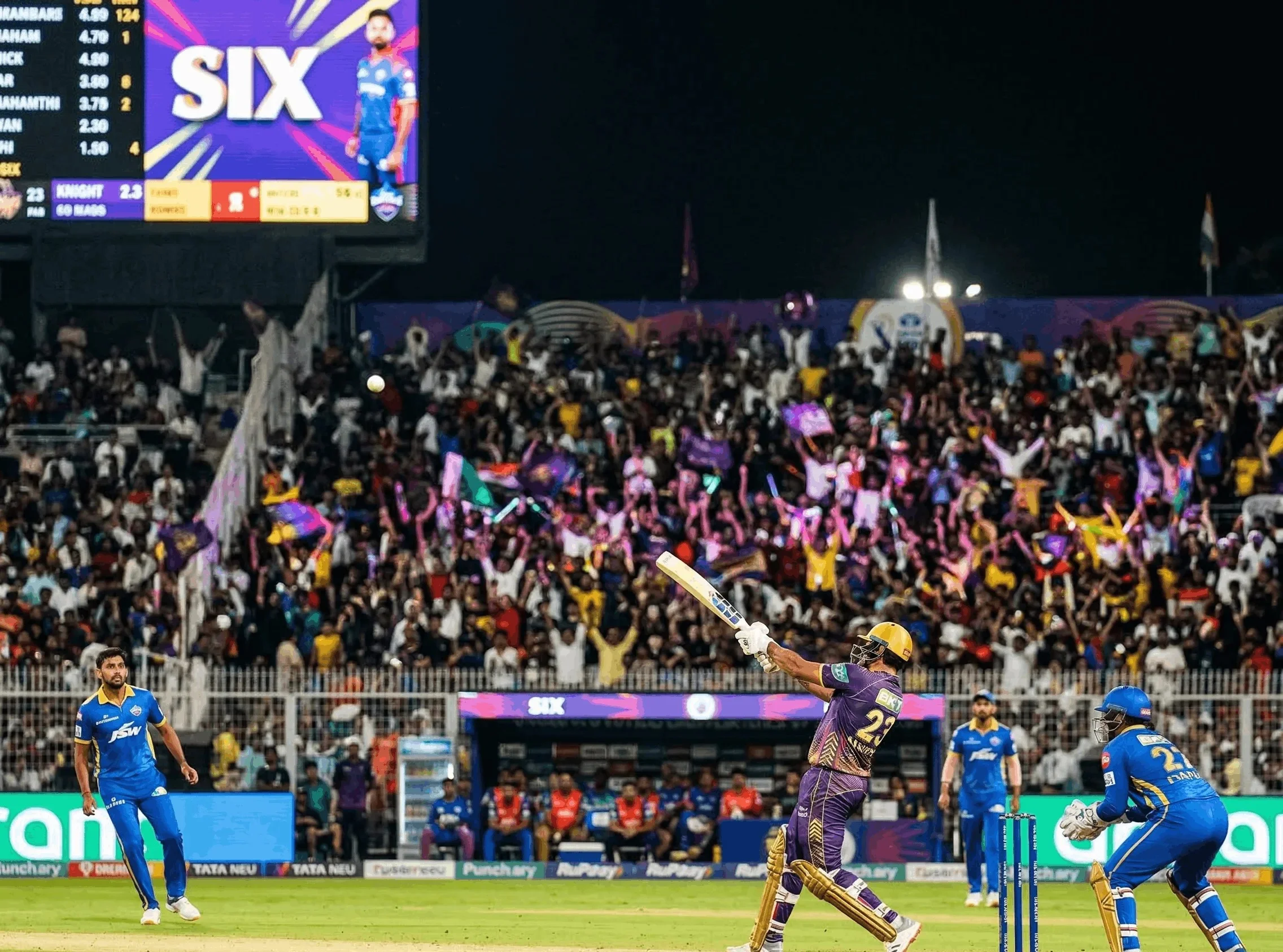
The Indian Premier League can feel confusing when you watch it for the first time. You see city-based teams, players from several countries, an auction, a points table, and playoff matches with unusual names.
Cricket Focus has broken the IPL into simple parts for new fans. Once you understand T20 cricket, franchise teams, and the four playoff games, the competition becomes easy to follow.
Quick Answer
The Indian Premier League, usually called the IPL, is a professional T20 cricket competition organized by the Board of Control for Cricket in India, or BCCI. Ten franchise teams compete in a league stage and playoffs to become IPL champion.
Each team normally bats for up to 20 overs. That equals 120 legal balls. Most matches finish in about three to four hours, which makes the IPL a practical starting point for fans used to major US sports.
What Is the Indian Premier League?
The IPL is an annual men’s franchise cricket competition in India. Its first season was played in 2008.
It is not a tournament between national teams. India, Australia, England, South Africa, and other countries do not compete as teams. Instead, players from different countries join franchises such as Mumbai Indians, Chennai Super Kings, or Royal Challengers Bengaluru.
This makes the IPL closer to a professional sports league than an international tournament. Our beginner guide to cricket competitions explains how franchise leagues fit beside domestic championships and national-team events.
What Does T20 Mean in the IPL?
T20 is a short form of cricket. Each team gets one innings of up to 20 overs. One over contains six legal balls, so a full innings has up to 120 legal deliveries.
- A coin toss helps decide which team bats or bowls first.
- Team A bats for up to 20 overs or until it loses 10 wickets.
- Team B then tries to pass Team A’s score within its 20 overs.
- The team with more runs wins.
- A tied match can be decided by a Super Over under the playing conditions.
A bowler can normally deliver no more than four overs. This forces a captain to use several bowlers. Batters also attack more often because they have fewer balls than in 50-over or Test cricket.
Is the IPL Like the NBA or NFL?
The comparison is helpful, but it is not exact.
Like major US leagues, the IPL has professional franchise teams, star players, owners, coaches, a regular season, standings, and playoffs. Teams build fan bases around cities or regions.
However, the IPL season is much shorter. Cricket rules are different, and players can also represent national teams and other clubs or leagues during the year.
The IPL auction is also different from an NBA or NFL draft. In a US draft, teams normally select new players in a set order. In an IPL auction, franchises bid from a fixed purse for eligible players. The highest valid bidder signs the player, subject to the competition’s squad rules.
Which Teams Play in the IPL?
The current IPL has 10 franchises.
| Team | Short name | City or regional identity |
|---|---|---|
| Chennai Super Kings | CSK | Chennai |
| Delhi Capitals | DC | Delhi |
| Gujarat Titans | GT | Gujarat |
| Kolkata Knight Riders | KKR | Kolkata |
| Lucknow Super Giants | LSG | Lucknow |
| Mumbai Indians | MI | Mumbai |
| Punjab Kings | PBKS | Punjab |
| Rajasthan Royals | RR | Rajasthan |
| Royal Challengers Bengaluru | RCB | Bengaluru |
| Sunrisers Hyderabad | SRH | Hyderabad |
These are franchises, not the same state teams that play in competitions such as the Ranji Trophy or Vijay Hazare Trophy. Squad members can come from India and overseas, although match-day rules limit how many overseas players can be used.
How Does the IPL Format Work?
The IPL has two main stages: the league stage and the playoffs.
During the league stage, teams earn points from their results. The top four teams in the combined standings advance to the playoffs.
The exact schedule pattern can change. In 2026, the 10 teams were placed in two virtual groups. Each team played 14 league matches.
- The other four teams in its own virtual group once each
- All five teams in the opposite group twice each
That creates 14 matches per team and 70 league matches in total.
The word “group” can mislead new fans. The IPL did not crown a separate Group A or Group B winner. Results from both virtual groups went into one combined points table, and the top four teams advanced.
Because the opponent pattern has changed before, fans should check the format for the season they are watching rather than treating the 2026 pattern as permanent.
How Does the IPL Points Table Work?
For the 2026 league stage, the basic points system was:
| Match result | Points |
|---|---|
| Win | 2 |
| Abandoned match with no result | 1 |
| Loss | 0 |
If teams finish level on points, net run rate can separate them. Net run rate, or NRR, compares how quickly a team scores with how quickly its opponents score across the competition.
Here is a hypothetical example. Team A has 18 points and a positive NRR. Team B also has 18 points but a lower NRR. Team A ranks above Team B if NRR is the deciding tiebreaker. This is not a real IPL table.
How Do the IPL Playoffs Work?
The top four teams do not enter two normal semifinals. The IPL uses Qualifiers and an Eliminator to reward the top two league finishers.
| Playoff match | Teams | Result |
|---|---|---|
| Qualifier 1 | 1st vs 2nd | Winner reaches the Final; loser gets another chance |
| Eliminator | 3rd vs 4th | Winner advances; loser is eliminated |
| Qualifier 2 | Loser of Qualifier 1 vs winner of Eliminator | Winner reaches the Final |
| Final | Winner of Qualifier 1 vs winner of Qualifier 2 | Winner becomes IPL champion |
Finishing first or second is valuable because those teams have two possible paths to the Final. A team in third or fourth must win the Eliminator and then Qualifier 2.
How Does the IPL Auction Work?
Before a season, teams can retain some players under the current rules. Other eligible players may enter an auction.
Each franchise has a spending limit, often called its purse. Teams bid against each other, and the highest valid bid can secure a player. The cost comes out of that team’s purse.
A player can also remain unsold if no franchise makes a successful bid. Teams may later sign approved replacement players when squad members become unavailable.
Auction and retention rules can change between cycles. The simple idea is that the system gives teams a way to build and rebalance their squads while staying within league limits.
What Happens During an IPL Match?
IPL cricket moves quickly, but the scoreboard gives you everything you need.
Suppose a team is 85/3 after 10 overs. It has scored 85 runs, lost three wickets, and used half of its 20 overs.
During the first six overs, a powerplay limits how many fielders can stand outside the inner circle. Batters often try to score quickly, while bowlers look for early wickets.
The middle overs can involve spin bowling and careful matchup decisions. The final overs, often called the death overs, usually bring more attacking shots, yorkers, slower balls, and boundary attempts.
Why Is the IPL Important?
It Brings International Players Together
Players who are opponents in international cricket can become teammates in the IPL. This creates unusual combinations and gives younger players experience with established professionals.
It Gives Indian Players a Major Stage
Domestic players can perform in front of large audiences and against international talent. Strong IPL form can bring attention, but it does not automatically guarantee selection for India.
It Has Influenced Modern T20 Strategy
Teams use specialist coaches, matchup data, flexible batting orders, and different bowling roles. Many ideas seen in other T20 competitions have been developed or tested under IPL pressure.
It Is Easy for New Fans to Sample
A match normally fits into one evening. New viewers can learn the teams, follow a short league table, and see a champion decided within a single annual season.
IPL vs International Cricket
| Feature | IPL | International cricket |
|---|---|---|
| Team type | Franchise | National team |
| Main IPL format | T20 | Test, ODI, or T20I |
| Player mix | Indian and overseas players | Players represent one country |
| Season goal | Win the IPL title | Win a match, series, or international event |
| Organizer | BCCI and IPL governing structure | ICC and national cricket boards, depending on the event |
An IPL title belongs to a franchise. It does not make India the world champion. International trophies such as the Cricket World Cup have separate teams, qualification rules, and histories.
Who Won the Latest IPL?
Royal Challengers Bengaluru are the current champions. RCB defeated Gujarat Titans by five wickets in the 2026 Final and successfully defended the title they won in 2025.
The official IPL 2026 Final report confirms that RCB chased 156 and won with 12 balls remaining.
For wider historical context, Chennai Super Kings and Mumbai Indians are tied as the most successful teams with five titles each. A separate Cricket Focus record guide will cover the full comparison without crowding this beginner explainer.
How Can You Choose an IPL Team?
There is no wrong choice. A new fan can start with a favorite player, city or region, team identity, playing style, or family connection.
Watch several matches before deciding. You do not need to choose the team with the most trophies. Following a team whose players or style you enjoy will make the season more interesting.
How Can Fans Watch the IPL in the USA?
In 2026, Willow TV carried IPL coverage in the United States and was available through some TV and streaming packages, including certain Sling TV options.
Broadcast rights, prices, and packages can change before a new season. Check the official IPL broadcaster information and the provider’s current US listing before paying for a subscription.
Most IPL matches begin in the morning in the United States because India is ahead of US time zones. Afternoon games in India can start even earlier for American viewers. Always convert from Indian Standard Time for the date and location where you live.
Common IPL Confusions
IPL Teams Represent Countries
No. IPL teams are franchises. Players from several countries can be teammates.
Every Team Plays Every Opponent Twice
Not always. The opponent pattern depends on the season’s format. In 2026, each team played 14 matches but did not play every opponent twice.
The Two Groups Have Separate Standings
The 2026 groups organized the opponent schedule. Teams were ranked together in one combined points table.
Qualifier 1 Is a Normal Semifinal
The Qualifier 1 loser is not eliminated. It gets another chance in Qualifier 2.
The Auction Is the Same as a US Draft
No. IPL franchises bid for eligible players from a spending purse. A US draft normally gives teams selection turns in a set order.
Frequently Asked Questions
What is the IPL in simple words?
The IPL is India’s professional franchise T20 cricket league. Ten teams play a league stage and playoffs to decide a champion.
Is the IPL domestic or international cricket?
It is a domestic franchise competition organized in India. International players can participate, but the teams do not represent countries.
How long is an IPL match?
Most IPL matches take about three to four hours. Each team normally receives up to 20 overs, or 120 legal balls.
Why do the top two IPL teams get a second chance?
The playoff system rewards league performance. First and second meet in Qualifier 1, and the loser can still reach the Final by winning Qualifier 2.
How are IPL players selected?
Franchises build squads through player retentions, auctions, trades, and approved replacements under the rules for that season.
Conclusion
The Indian Premier League is a professional T20 competition built around franchise teams, a league table, and four playoff matches. Each team normally bats for 20 overs, so the action is faster than ODI or Test cricket. For a new US fan, the easiest way to start is to learn the score, choose a team or player to follow, and understand why a top-two finish matters. Remember that groups, squad rules, schedules, and broadcasters can change, so check current season information when the IPL returns.
Read More: What Is a Powerplay in Cricket? T20 and ODI Rules Explained
