




A new cricket bat arrives with a smooth face and a set of instructions that nobody reads. Then the owner takes it to the nets on Saturday, faces a hard new ball for the first time, and finds a dent in the middle of the blade by Sunday evening. That dent is the bat telling you it was never prepared for the impact.
Preparing a bat is called knocking it in, and it is the least glamorous part of cricket but one of the few jobs a beginner can do properly that actually protects their equipment. The knocking a cricket bat section of our cricket skills guide is a good place to see how it fits alongside the rest of your equipment basics.
Quick Answer
Knocking in a bat means gently compressing the soft fibres at its surface, usually with a bat mallet, so a hard ball cannot dent or crack it. Start with a light coat of raw linseed oil, work the face gently, then give the edges and toe most of your attention using angled strokes. Never strike an edge square on, never hit the back of the bat, and stop when the surface has stopped firming up. You are looking for a bat that survives, not a bat that hits harder.
What Knocking In Actually Does
A cricket bat blade is willow, and willow is a fibrous timber with a great deal of give in it. Bats are pressed in a workshop to form a hard layer at the surface, but pressing does not finish the job. The outermost fibres still sit soft, and they still carry most of the moisture.
That is the problem. A hard leather ball arriving at speed does not just press a dent into soft wood, it can split it. The crack then runs along the grain, and the bat is finished. This is why new bats show seam marks, dents and edge chips in their first few weeks if they are used straight away.
Knocking in reduces the softness at the surface so that the same impact is absorbed and spread rather than concentrated into a dent. The University of Cambridge research on cricket bat materials examined this process closely, and it produced a finding that surprises most people.
It Is a Surface Treatment, Not a Power Trick
The Cambridge work measured how knock-in changes a bat’s surface hardness and then looked at the wood under a microscope. The cells near the surface collapse under knock-in and form a denser, harder layer. But the layer is thin, and the researchers concluded that knock-in does not change the overall properties of the material. It only changes the surface.
This matters because a lot of advice online frames knocking in as a way of making a bat perform better or hit further. The evidence does not support that framing. What the surface treatment genuinely buys you is protection, and a longer-lasting bat. If someone at your club tells you a knocked-in bat is a better bat, treat that as a marketing habit rather than a fact.
Do You Need to Knock a New Bat?
Usually, yes, but the honest answer has conditions attached.
Some bats are sold already pressed and part-prepared, and the term used on the label varies between makers. Pre-knocked, pre-prepared and match-ready do not mean the same amount of work to everyone. A bat that has already been through a press needs less hand knocking than one that has only been shaped. The right move is to follow the instruction sheet that came with the bat, and if there isn’t one, ask the dealer who sold it to you.
Three situations where you can relax about it:
- You have a hard plastic or fibreglass training bat. There are no fibres to compress, so there is nothing to prepare.
- The maker or your dealer has done it for you. Many shops offer a knocking-in service, and a professional job with a mallet is better than a rushed one at home.
- Your club runs a rolling ball session for new kit. Some leagues deliberately start new bats on old balls for exactly this reason.
One thing worth being clear about: the Laws of Cricket do not require a bat to be knocked in. Law 5 sets out what a bat must be made of and the size limits it must meet, and preparation is not among them. Knocking in is good practice for protecting your equipment, not a rule you can be penalised for breaking.
How to Knock a Cricket Bat, Step by Step
Work through the stages in order. The whole process is unhurried, and doing it in short sessions over several days is better than one long afternoon.
1. Oil the Bat First
Willow that has been stored can be dry, and dry wood cracks instead of stretching. A thin coat of raw linseed oil before you knock gives the fibres some elasticity, which is exactly what you want them to have when a ball hits them.
Apply a light coat to the face, then wipe the small amount left on your hands over the edges and the toe. Keep oil off the handle and off the splice, which is the triangular area where the handle meets the blade. Let each coat soak in for a day before the next, and two or three coats is a sensible amount for a dry bat.
2. Work the Face Gently
Use a bat mallet, which is a shaped hardwood tool made for the job. You can also use the edge of an old bat. What you must not do is start with a new cricket ball, because that is the very thing you are protecting the bat from.
Tap the middle of the face with light, even strokes, then move outwards. The aim at this stage is to wake the fibres up, not to crush them. You are looking for a faint, temporary indentation that the mallet leaves and then springs back out of. Hold the bat up to the light to check your progress.
3. Spend Most of Your Time on the Edges and Toe
This is the part people skip and the part that decides how long the bat lasts. The edges and the toe are the sharpest curves on the blade, which means the force of an impact is concentrated into a smaller piece of wood. It is also the area least well covered by the workshop press, so it is the softest part of a new bat.
Strike along the edge at an angle, roughly 45 degrees, so the mallet compresses the wood beside the edge. You are rounding and firming the corner over, not flattening it. The toe gets the same treatment from a couple of angles.
4. Never Hit an Edge Square On
Striking an edge or toe straight across, at 90 degrees to the face, is the single most damaging thing a beginner can do while knocking in. It concentrates the whole force into a narrow band of unpressed wood, and it narrows the edge as it goes. That is how hairline cracks start.
The same applies to the back of the bat. Leave the back alone entirely. The handle joins the blade there, and the back of the blade is the part carrying the load when the bat is swung.
5. Finish With Balls, Not the Mallet
Mallet work prepares the bat. Ball work is what confirms it. Move on to an old, scuffed leather ball and throw it down at the face yourself. Then try club balls, then only then a new ball.
A few seam marks on the face are normal and every bat gets them. What you are watching for is depth. If the ball is marking the wood itself rather than leaving a mark on the surface, the bat needs more preparation. If the mark comes out, you are ready.
When to Stop: The Part Most Advice Gets Wrong
Ask five people how long to knock in a bat and you will get five different answers. Some will say ten minutes, some will say an hour, some will say to leave it overnight. One will tell you it takes ten sessions of ten minutes, another will say six to ten hours in total. None of these are wrong, because willow varies and the bats differ, but the inconsistency is not helpful to a beginner who just wants a safe answer.
Important
More knocking is not better. The published research found that a willow bat’s surface hardness climbs with knock-in time, reaches a peak at around two hours, and then starts to fall again, because the cells nearest the surface begin to break down and lose the hardened quality that was the whole point. Past that point you are not protecting the bat any more, you are damaging it. Judge the bat, not the clock, and stop when the surface stops firming up.
So how do you judge it? Watch the surface as you work. Early on, every stroke leaves a soft dent that springs back. After enough work, the dent stays but shallower and shallower, and the face develops a hard, slightly polished feel under the mallet. That is the signal to move on to balls. Once the surface stops changing, more knocking achieves nothing.
If you are not confident, the cheapest good decision is to have a dealer or a bat-maker do it. It is a small cost against a bat that survives a season instead of a month.
What Knocking In Does Not Do
Three myths worth clearing up, because each one leads to a mistake:
- It does not add power. The effect is confined to a thin layer at the surface. If your shots are not going where you want them, the answer is your batting grip and your footwork, not your bat.
- It does not fix a bat that is the wrong size or weight. Preparation cannot make a bat easier to swing. A bat you find heavy is a bat you should discuss with a dealer, and our cricket bat weight guide explains how to test one.
- It does not stop you cracking the edge by playing. A prepared bat still needs to be maintained, and the edges still need anti-scuff protection in a hard session.
Common Knocking Mistakes
| Mistake | What it causes | What to do instead |
|---|---|---|
| Taking a new bat straight to a hard ball | Deep dents, seam marks cut into the wood, cracked toe | Oil, then mallet, then old balls, then new |
| Hitting the edge square on | Hairline cracks in the edge, edge narrowed down | Strike at roughly 45 degrees, along the edge rather than across it |
| Knocking the back of the bat | Damage where the handle meets the blade | Only ever work the face, the edges and the toe |
| Knocking for a fixed number of hours | Surface cells break down after the peak, bat is weaker than before | Stop when the face stops firming up, which in willow is usually well before people expect |
| Oiling the handle and splice | Greasy grip, oil weakens the glue at the splice | Oil the blade, edges and toe only, using a light coat |
Almost all of the damage people do to new bats comes from eagerness rather than ignorance. Treating a new bat like a used one is the whole idea.
Frequently Asked Questions
How long does it take to knock in a cricket bat?
There is no single number, and anyone who gives you a confident figure is guessing about your bat. Willow varies and so do the amounts of workshop pressing a bat has already had. The published research found a willow surface reaches its peak hardness after around two hours, and that going past the peak is counter-productive. Use the state of the face as your guide rather than a stopwatch.
Do professional batsmen knock in their bats?
Many do, and many do not. It is not a mark of a serious player either way. Professionals have teams and bat-makers who prepare bats as part of a wider maintenance routine, and a small number simply accept the risk with a bat they know well. For a beginner with one bat and a limited budget, the case for preparing it is straightforward.
Can I knock in a bat with a cricket ball instead of a mallet?
You can, and plenty of people do, but use an old ball rather than a new one. A mallet gives you far more control over how hard you are hitting and where on the face the force lands, which is what makes it easier to avoid cracking an edge. A hard new ball applied too early is the exact risk you are trying to remove.
My bat already has dents in the face. Is it ruined?
Almost certainly not. A shallow dent in a bat that has been used for a few weeks is normal and it does not stop you playing. Deep dents that go through into the wood, cracks, or a separated edge are a different matter. If a crack is visible, stop using the bat and get it checked rather than trying to knock the damage out.
Does knocking in make my bat hit further?
No. The research is clear that knock-in affects the surface of the bat rather than its overall properties, so it is a durability treatment. If you want the ball to travel further, that comes from how the bat is swung, which is a technique question, not a bat preparation question.
Conclusion
Knocking in a bat is about giving it a chance to survive contact with a hard ball. Oil it lightly, work the face gently, put most of your attention on the edges and toe at an angle, and never strike an edge square on. Watch the surface rather than the clock, because the surface stops firming up well before most people expect. Once it has, move on to old balls and let the bat finish telling you it is ready. If you would rather not learn the hard way, a dealer will do it for a modest fee and the bat will thank you for it across a whole season.
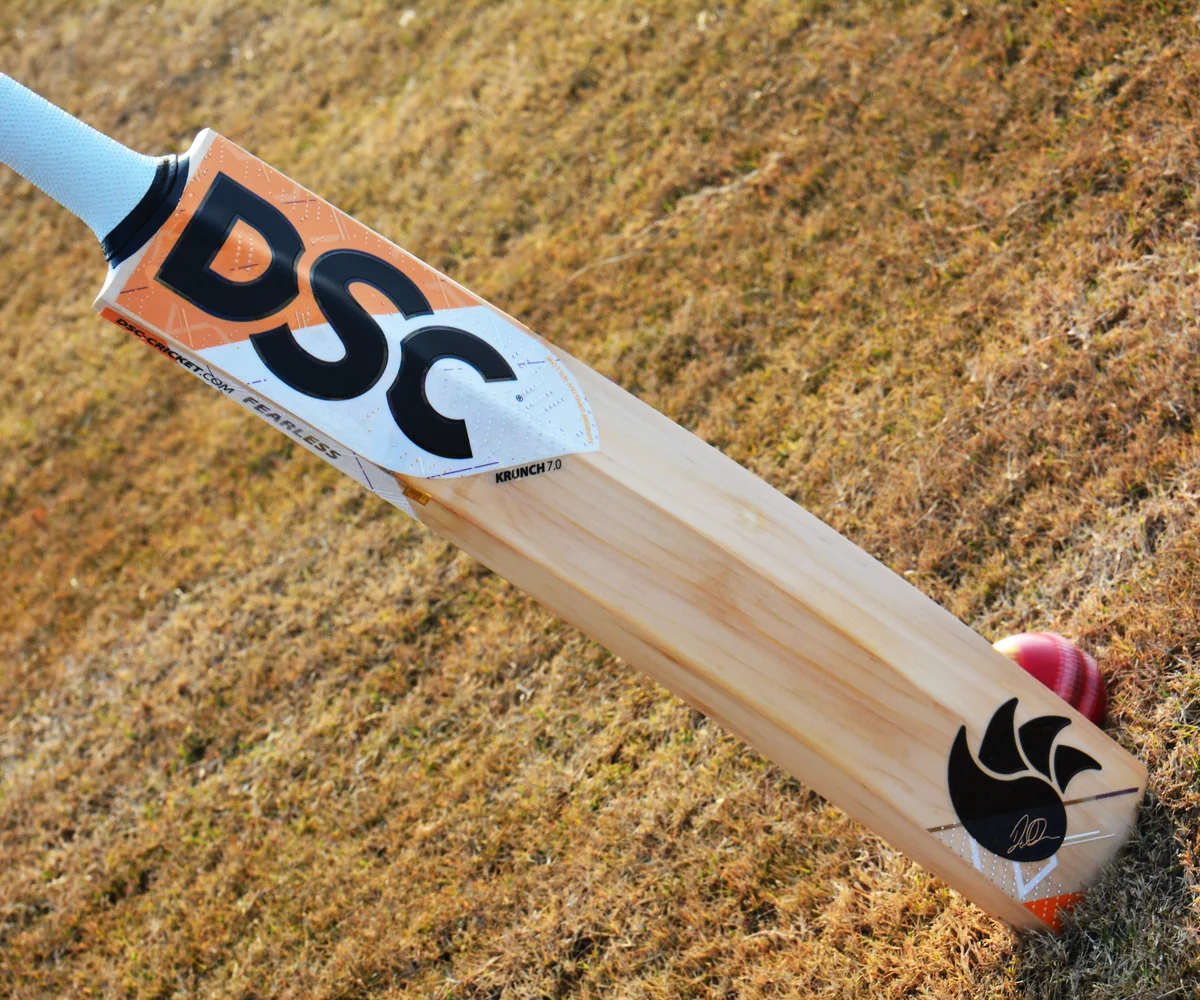
Photo: an English willow cricket bat, the type of blade that needs preparing before use in a match. Photograph by Arv94, licensed under CC BY-SA 4.0. Cropped to 1200 by 1000 pixels.
Read More: Cricket Culture and Gear: A Beginner’s Guide to Equipment
