




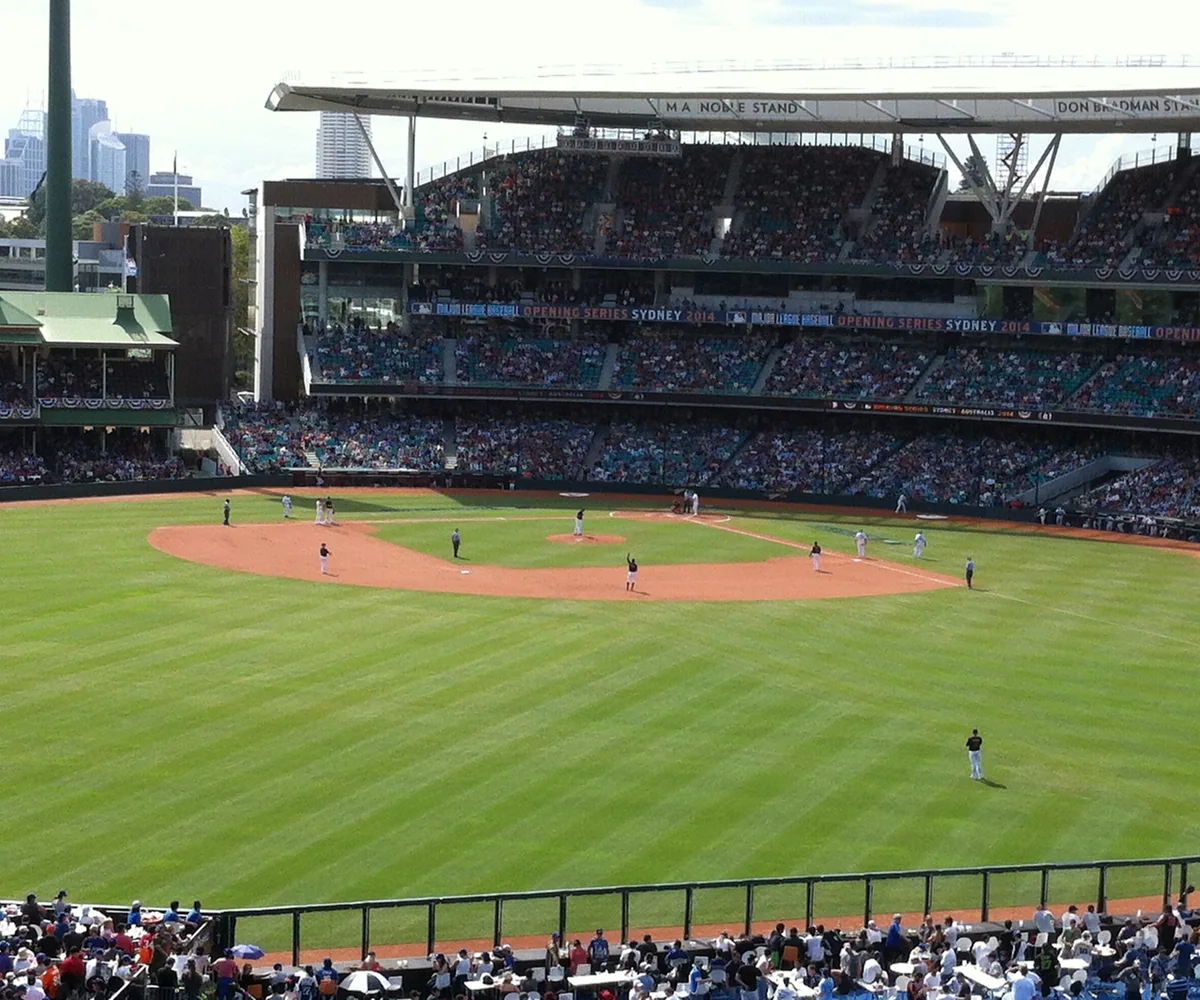
If you grew up with baseball, cricket can look familiar for about ten seconds. Someone throws a ball, someone swings a bat, and fielders try to catch it. Then the batter hits the ball behind them, does not run, and nobody calls it foul.
This guide to cricket vs baseball compares the two sports side by side using the official rulebooks of each game. If a word like wicket trips you up along the way, our guide to what a wicket is in cricket explains it in plain English.
Quick Answer
Cricket and baseball are both bat-and-ball games where batters score runs and fielders try to get them out. The biggest difference is outs: a cricket team bats until 10 batters are out, while a baseball half-inning ends after 3 outs. Cricket also has 11 players a side, a flat bat, and no foul territory.
How Are Cricket and Baseball Alike?
The two sports share the same basic idea. One team bats and tries to score runs. The other team fields and tries to get batters out.
- A player delivers the ball to a batter: the bowler in cricket, the pitcher in baseball.
- The batter tries to hit it with a wooden bat and score runs.
- Catching a batted ball before it touches the ground gets the batter out in both games.
- The team with more runs at the end wins.
Beyond that, the details change almost everything about how the games feel.
Cricket vs Baseball: Key Differences at a Glance

| Feature | Cricket | Baseball |
|---|---|---|
| Players per team | 11 | 9 |
| Outs that end a team’s turn | 10 wickets in an innings | 3 outs in a half-inning |
| Turns per game | 1 or 2 innings per team | 9 innings |
| Ball weight | 5.5 to 5.75 oz | 5 to 5.25 oz |
| Bat | Flat blade, up to 38 in long and 4.25 in wide | Round, up to 42 in long and 2.61 in thick |
| Delivery distance | Wickets are 22 yards (66 ft) apart | Pitcher’s plate is 60 ft 6 in from home plate |
| Foul territory | None | Outside the first and third base lines |
| Fielders’ gloves | Only the wicketkeeper | Every fielder may wear one |
Cricket figures come from the MCC Laws of Cricket and apply to adult equipment. Baseball figures come from MLB’s Official Baseball Rules.
Outs and Innings: The Biggest Difference
In baseball, three outs end a half-inning, and a regulation game has nine innings. Teams take turns batting many times.
In cricket, a team keeps batting until 10 of its 11 batters are out. Batters always bat in pairs, so when the tenth wicket falls there is no partner left and the team is “all out.” In shorter formats, an innings can also end when the team’s set number of overs runs out. An over is 6 balls delivered by one bowler.
Because outs are so valuable, a good cricket batter can stay in for hours and score 100 runs or more in one innings. That is why cricket team totals like 250 or 300 are common, while baseball scores usually stay in single or low double figures.
The ICC, cricket’s world governing body, made this guide for baseball fans, presented by Jomboy:
Bowling vs Pitching
A baseball pitcher throws the ball. A cricket bowler is not allowed to. Under the Laws of Cricket, once the bowler’s arm reaches shoulder height, the elbow must not straighten until the ball leaves the hand. Bowling underarm is also not allowed unless both teams agree before the match.
The target is different too. A pitcher aims at the strike zone. A bowler usually aims at the wicket, the three stumps behind the batter. If the ball hits the wicket and knocks a bail off, the batter is out “bowled.”
Most cricket deliveries also bounce once on the pitch before reaching the batter. Bowlers use that bounce, along with swing and spin, to beat the bat.
Batting: Flat Bat, No Foul Lines, No Forced Run
A cricket bat has a flat face, which makes it easier to steer the ball into gaps. A baseball bat is round and built for full swings. Cricket batters also wear leg pads, gloves, and usually a helmet, because the hard ball comes at their body as well as the stumps.
Three batting rules surprise most baseball fans:
- No foul territory. A cricket batter can hit the ball in any direction, even backward past the wicketkeeper.
- Running is optional. In baseball, a batter who hits a fair ball becomes a runner. In cricket, batters only run when they think it is safe.
- Boundaries replace home runs. A ball that reaches the boundary rope after touching the ground scores 4 runs. One that clears the boundary in the air scores 6.
In this MLB video, English cricketer Laurie Evans tries his cricket hitting skills against baseball pitching:
The Field and the Fielders
A baseball field is a diamond. Under MLB rules, the infield is a square with 90-foot sides, and a ball that settles outside the first and third base lines is foul.
A cricket field is usually a large oval with no foul lines, so fielders are spread all the way around the batter. The long, narrow strip in the middle, called the pitch, is where all the bowling and batting happens.
Fielding is also tougher on the hands. In baseball, every fielder may wear a leather glove. In cricket, only the wicketkeeper, who stands behind the stumps like a catcher, may wear gloves. Everyone else catches a hard ball bare-handed.
Important
“Innings” is both singular and plural in cricket. One team’s turn at bat is “an innings,” not “an inning,” and it can last far longer than a baseball inning.
How Long Does Each Game Take?
Baseball has one main format. Cricket has three, and their length depends on how many overs or days are allowed:
- T20: 20 overs per team, the shortest of the three international formats and the easiest place for new fans to start.
- One Day International (ODI): 50 overs per team, played in a single day.
- Test cricket: each team bats twice, over as many as five days.
Our guide to Test, ODI, and T20 cricket explains how each format works and which one to watch first.
Frequently Asked Questions
Is cricket like baseball?
Yes, in its basic idea. Both are bat-and-ball games where one team bats to score runs and the other fields to get batters out. The rules on outs, running, fielding, and the shape of the field are very different.
Is cricket harder than baseball?
Neither is simply harder. Cricket fielders catch without gloves and batters must protect the stumps from a bouncing ball, while baseball hitters must time a thrown pitch with a round bat. Each sport tests different skills.
Which is heavier, a cricket ball or a baseball?
A cricket ball. It weighs 5.5 to 5.75 ounces under the Laws of Cricket, while a baseball weighs 5 to 5.25 ounces under MLB rules.
Is there a home run in cricket?
The closest thing is a six. When the batter hits the ball over the boundary without it touching the ground, the team scores 6 runs. A ball that rolls or bounces to the boundary scores 4.
Why don’t cricket fielders wear gloves?
The Laws of Cricket allow only the wicketkeeper to wear gloves. Other fielders catch with bare hands, though they may use finger protection with the umpires’ consent.
Final Thoughts
Think of cricket as baseball with longer turns at bat. Batters have 10 outs to share instead of 3, they can hit in any direction, and they only run when it makes sense. Start with a T20 match and keep the comparison table handy while you watch.
