


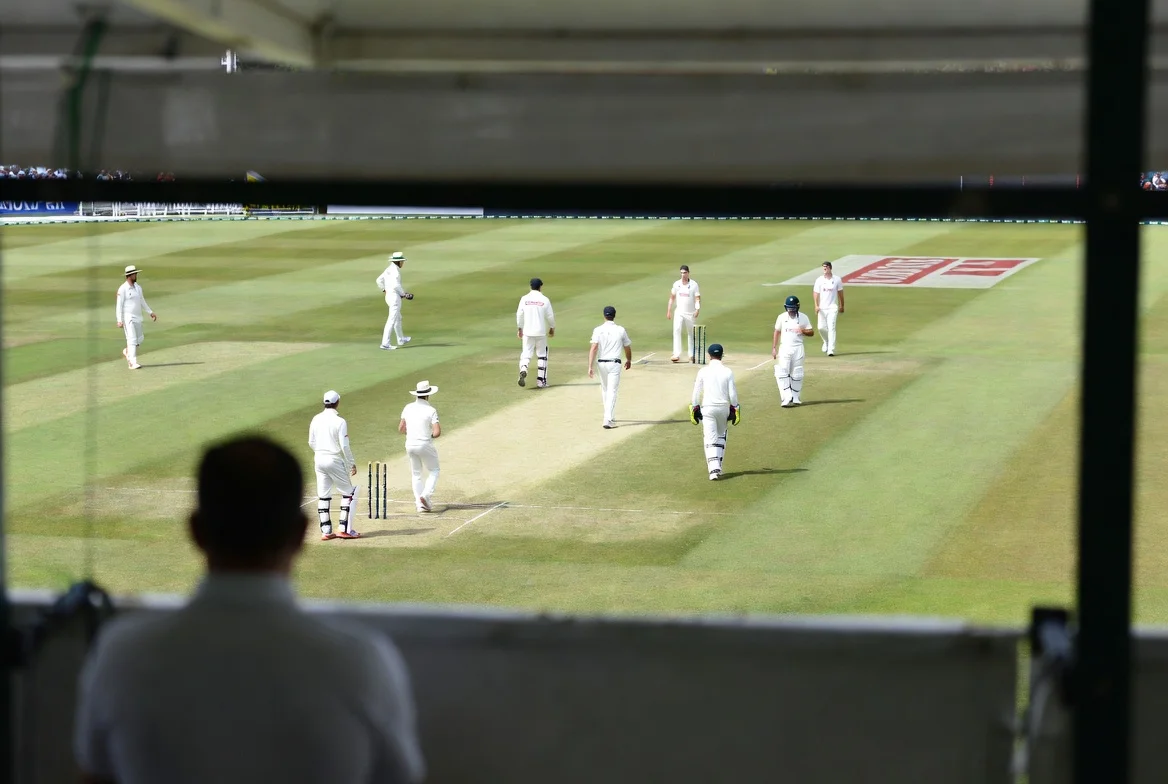
The first time I watched a cricket match with friends who usually follow baseball, the game made sense until the scoreboard showed 45/1 (7.4) and the players suddenly changed sides. Everyone in the room paused because it looked like a mistake. The batter had just faced a ball, yet the bowler walked away and a new one arrived from the other end. The numbers looked like decimals, but the match did not behave like decimals. That single moment is where most new viewers lose track of the game.
Cricket is not confusing because of its big rules — it feels confusing because of its repeating rhythm. The match moves in short cycles, and if you don’t understand those cycles, everything looks random. Once you understand what an over is, the scoreboard becomes readable and the flow of the match becomes predictable. This guide explains the over so you can watch a live game and actually follow what is happening.

What is an Over in Cricket? A Simple Beginner Guide
Many new viewers feel confused when they watch cricket for the first time.
The scoreboard shows numbers like 87/2 (12.3 overs) and suddenly players switch sides.
If this ever made you feel lost — don’t worry.
This is the exact moment most people search this rule.
To understand how overs work in cricket, you only need one small idea:
Cricket runs in short turns, not continuous play.
Once you understand overs, you can follow the match live without guessing.
What is an Over in Cricket?
An over is a set of six legal balls bowled by one bowler to a batter.
After six valid deliveries:
- The umpire calls “Over”
- A new bowler bowls from the opposite end
- Batters switch sides
- Fielders reposition
Simple meaning:
An over is a reset point in the match where control shifts between teams.
Think of it as one short round inside a long game.

What Counts as a Legal Ball?
Not every delivery counts in the six balls.
These do NOT count:
- Wide ball
- No ball
- Dead ball
The bowler must continue until six valid balls are completed.
So sometimes you may see 7 or 8 deliveries in one over —
but only six legal balls are counted on the scoreboard.
What Happens After an Over?

After every over:
- The umpire calls “Over”
- Players change ends
- A different bowler usually bowls next
- Field placements adjust
For viewers, this is a natural pause in pressure.
You will notice batters often relax for a second —
then the next over builds pressure again.
Why Cricket Uses Overs
Cricket does not run continuously like soccer or basketball.
Overs exist to keep the contest fair between bat and ball.
Overs help the game by:
- Preventing one bowler from tiring batters endlessly
- Giving batters a predictable rhythm
- Allowing captains to change tactics
- Creating momentum swings
So overs control the tempo of the match.
How Many Overs Are in a Match?
Different formats use different limits.
| Format | Overs Per Team |
| Test Match | Unlimited (time based) |
| ODI | 50 overs |
| T20 | 20 overs |
Shorter formats mean faster scoring pressure.
How Overs Tell You Who Is Winning (Run Rate)
When watching live, overs matter more than total runs.
Run Rate = Runs ÷ Overs
Example:
120 runs in 15 overs
Run rate = 8 per over
If a chasing team needs 10 per over but scores only 7 →
they are falling behind even if wickets remain.
This is how commentators judge match pressure.
Economy Rate (Bowler Control)
Overs also show bowling performance.
Economy Rate = Runs conceded ÷ Overs bowled
Example:
24 runs in 4 overs = economy 6.00
Lower economy means the bowler is controlling the game.
How to Read 15.3 Overs (Very Important)
This confuses almost every new viewer.
15.3 overs does NOT mean decimal
It means:
15 overs + 3 balls
15 overs = 90 balls
- 3 balls = 93 balls bowled
So the batting team has faced 93 deliveries.
Once you learn this, scoreboards become easy to read.
How Many Overs Can a Bowler Bowl?
| Format | Max Overs Per Bowler |
| T20 | 4 overs |
| ODI | 10 overs |
| Test | No fixed limit |
This forces captains to rotate bowlers and manage stamina.
Types of Overs in Cricket
Maiden Over — no runs scored (pressure builds)
Powerplay Over — fielders restricted (scoring chance)
Death Over — final overs, batters attack heavily
Super Over — tie-breaker in limited matches needing a winner
Different overs create different match situations.
What Happens If a Bowler Gets Injured Mid-Over?
If a bowler cannot finish:
- Another bowler completes the remaining balls
- That bowler cannot bowl the next full over
This keeps the advantage fair.
Free Hit After a No Ball
In limited-overs cricket, a front-foot no ball gives a free hit next ball.
The batter cannot be out bowled, LBW, or caught.
That is why batters swing aggressively after a no ball.
Why Overs Have Six Balls (History)
Overs were not always six balls.
Earlier cricket used:
- 4-ball overs
- 8-ball overs
Six balls became the global standard for balance and viewing pace.
What is an Innings vs an Over?
- Over → 6 balls
- Innings → Full batting turn
An innings contains many overs.
Overs are the building blocks of the match.
Cricket Over vs Baseball Inning

For American viewers:
| Cricket | Baseball |
| Fixed 6 balls | Unlimited pitches |
| Bowlers rotate | Pitcher stays |
| Run rate matters | Batting average matters |
This comparison helps understand match flow.
Records in a Single Over
An over can change everything.
Examples:
- Six sixes in one over
- Hat-trick wickets
- 30+ runs
Six balls can decide momentum.
Quick Summary
- One over = six legal balls
- Players switch ends after every over
- Overs control scoring speed
- Run rate shows match pressure
- Scoreboard counts balls, not decimals
Now when you see 12.3 overs, you can follow the game confidently.
Conclusion
After explaining cricket basics to many first-time viewers, I noticed the same pattern every time: the match starts to make sense the moment overs make sense. People stop asking why players changed ends and start noticing pressure, scoring speed, and momentum shifts. When you can read overs, the scoreboard stops being numbers and starts telling a story about time remaining and control in the game. That is why an over is more than just six balls — it is the structure that lets you understand the match as it unfolds.
