




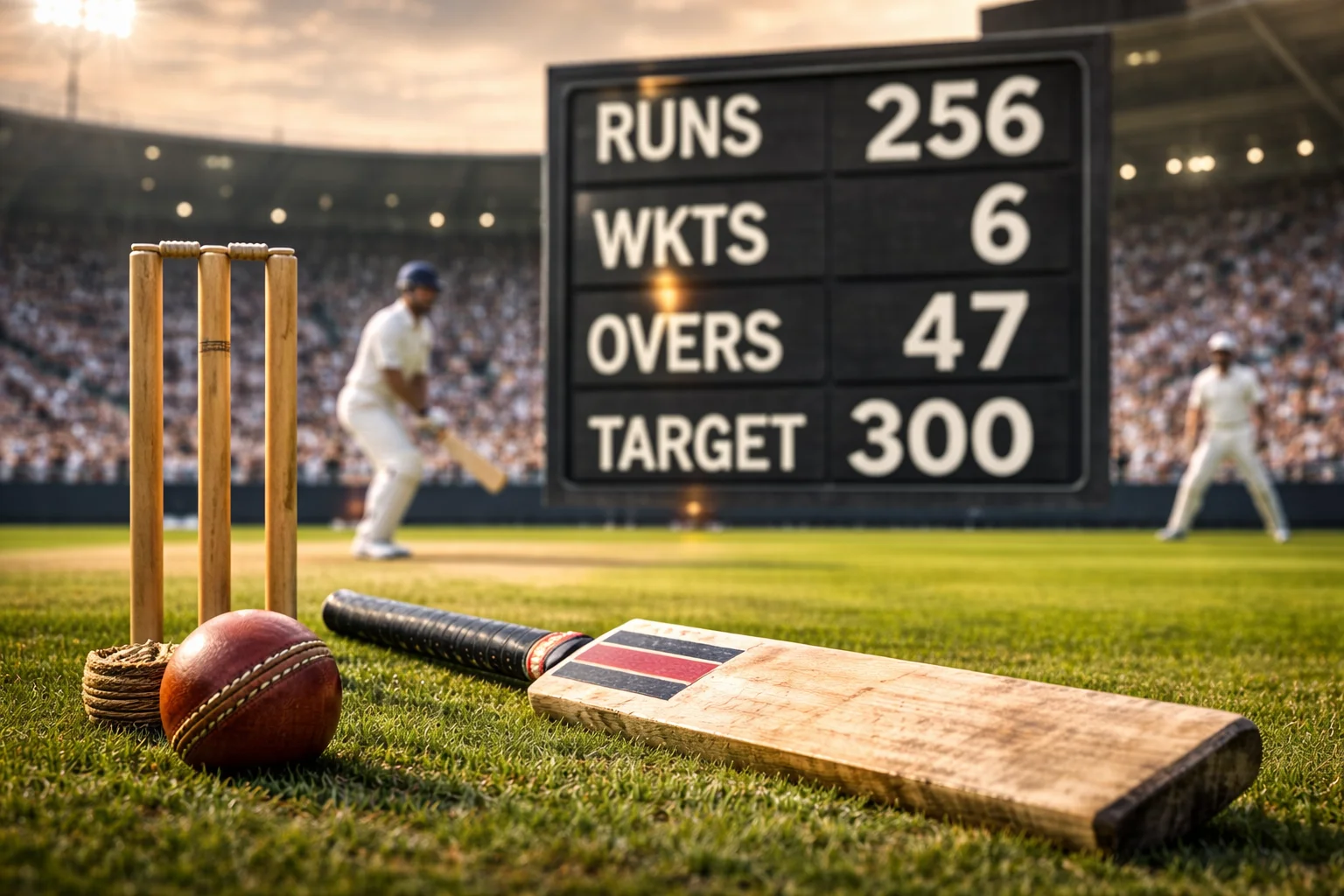
Many people feel confused when they first see a cricket score. You might see something like 150/6 (18.2 overs) and not understand what it means. This is very common, especially for beginners in the United States who are watching cricket for the first time. Many viewers struggle to follow the match because they do not understand runs, overs, or wickets, and the scoring system feels completely different from sports like baseball.
Most confusion comes from how the scoring system is presented, and it matters when explaining the game to beginners. Once it is explained in a simple and structured way, everything becomes clear very quickly. The cricket scoring system is broken down step by step below, using easy examples and real match situations so you can understand the game with confidence.
What is Cricket? The Basics You Need to Know
Cricket is a bat-and-ball game played between two teams of 11 players.
The goal is simple:
- One team scores runs
- The other team tries to stop them and take wickets
The team with more runs wins the match.
What is an Innings in Cricket?
An innings is the time when one team bats.
First:
- Team A bats and scores runs
Then:
- Team B bats and tries to chase that score
In most matches, each team gets one innings. However, in Test cricket, teams get two innings.
How Cricket Scoring Works
The cricket scoring system is based on three main elements:
- Runs
- Wickets
- Overs
These three factors decide the total score and match result.
How Cricket Scoring Works: The Three Core Elements
Runs: The Points System
Runs are the main way to score in cricket.
A batsman scores runs by:
- Running between the wickets
- Hitting the ball to the boundary
Types of runs:
- 1, 2, or 3 runs by running
- 4 runs when the ball reaches the boundary
- 6 runs when the ball crosses the boundary in the air
Wickets: Getting Players Out
A wicket means a batsman is out.
Each team has 10 wickets.
Ways to get out:
- Bowled
- Caught
- Run out
- LBW
When all wickets fall, the innings ends.
Overs: The Time Units
An over has 6 balls.
Example:
- 1 over = 6 balls
- 10 overs = 60 balls
Overs limit how long a team can bat in short formats.
4 Ways That Cricket Is Scored
Cricket scoring happens mainly in four ways:
Runs
Scored by hitting and running.
Wickets
Losing players reduces scoring ability.
Boundaries
Fast scoring through 4s and 6s.
Extras
Runs given by the bowling team.
Advanced Scoring Concepts That Add Strategy
Extras: Free Runs from Mistakes
Extras are runs given by the bowling team.
Types:
- No Ball → +1 run and an extra ball. In T20 and ODI, it may also give a free hit
- Wide → +1 run and an extra ball
- Bye → ball misses bat and body
- Leg Bye → ball hits body
Boundaries: Quick Scoring Opportunities
- 4 runs → ball reaches boundary
- 6 runs → ball goes over boundary
Core Display Elements (Quick Score Format)
Example:
150/6 (18.2 overs)
- 150 = total runs
- 6 = wickets lost
- 18.2 overs = 18 overs and 2 balls
How to Read a Cricket Scoreboard (Step-by-Step)
Example:
120/3 (15 overs)
- 120 → runs
- 3 → wickets
- 15 → overs
You may also see:
- CRR (Current Run Rate)
- RRR (Required Run Rate)
What Does 150/6 Actually Mean in Cricket?
150/6 means:
- Team scored 150 runs
- Lost 6 wickets
How Each Ball is Scored (Ball-by-Ball System)
Example:
1, 0, 4, W, 2, 1
- 0 = dot ball (no run)
- W = wicket
Real Match Scoring Example (Easy to Understand)
Over 1:
1, 2, 0, 4, 1, 0 → 8 runs
Over 2:
6, 1, W, 0, 2, 1 → 10 runs
Total after 2 overs:
18/1
What is Run Rate in Cricket?
Run rate shows how fast a team scores.
Run Rate = Runs ÷ Overs
Example:
100 runs in 10 overs
Run rate = 10
What is Required Run Rate?
Required Run Rate shows how many runs are needed per over to win.
Example:
Need 60 runs in 6 overs
RRR = 10
What is Strike Rate in Cricket?
Strike rate shows how fast a batsman scores.
(Runs ÷ Balls) × 100
Example:
50 runs in 25 balls
Strike rate = 200
How to Read a Cricket Scorecard
Batsman Stats
- Runs
- Balls faced
- Strike rate
Bowler Stats
- Overs
- Runs given
- Wickets
Difference Between Test, ODI, and T20 Scoring
Test Cricket
No over limit, played over 5 days
ODI
50 overs per team
T20
20 overs per team, fast scoring
Cricket Scoring vs Baseball
Cricket:
- Continuous scoring
- Runs scored anytime
- Fixed innings
- Runs scored after bases
Cricket Scoring System Cheat Sheet (Quick Summary)
- Runs = points
- Wickets = players out
- Overs = time
- 4 & 6 = fast scoring
- Extras = bonus runs
- Run Rate = scoring speed
- Confusing overs with innings
- Misreading score like 120/3
- Ignoring run rate
- Not understanding extras
FAQs
What does 100/3 mean in cricket?
It means 100 runs and 3 wickets lost.
What is a dot ball?
A ball where no run is scored.
What is a good run rate?
In T20, above 8 is good.
How many balls are in an over?
6 balls.
Conclusion
The cricket scoring system may look complex at first, but it is actually simple when you understand the basics like runs, wickets, and overs. Most people only struggle at the start. When cricket guides help beginners read the scorecard and follow each ball, the game becomes much easier and more enjoyable. If you apply what you have learned in this guide and watch a few matches with this understanding, you will quickly move from confusion to confidence and start enjoying cricket like regular fans.
