




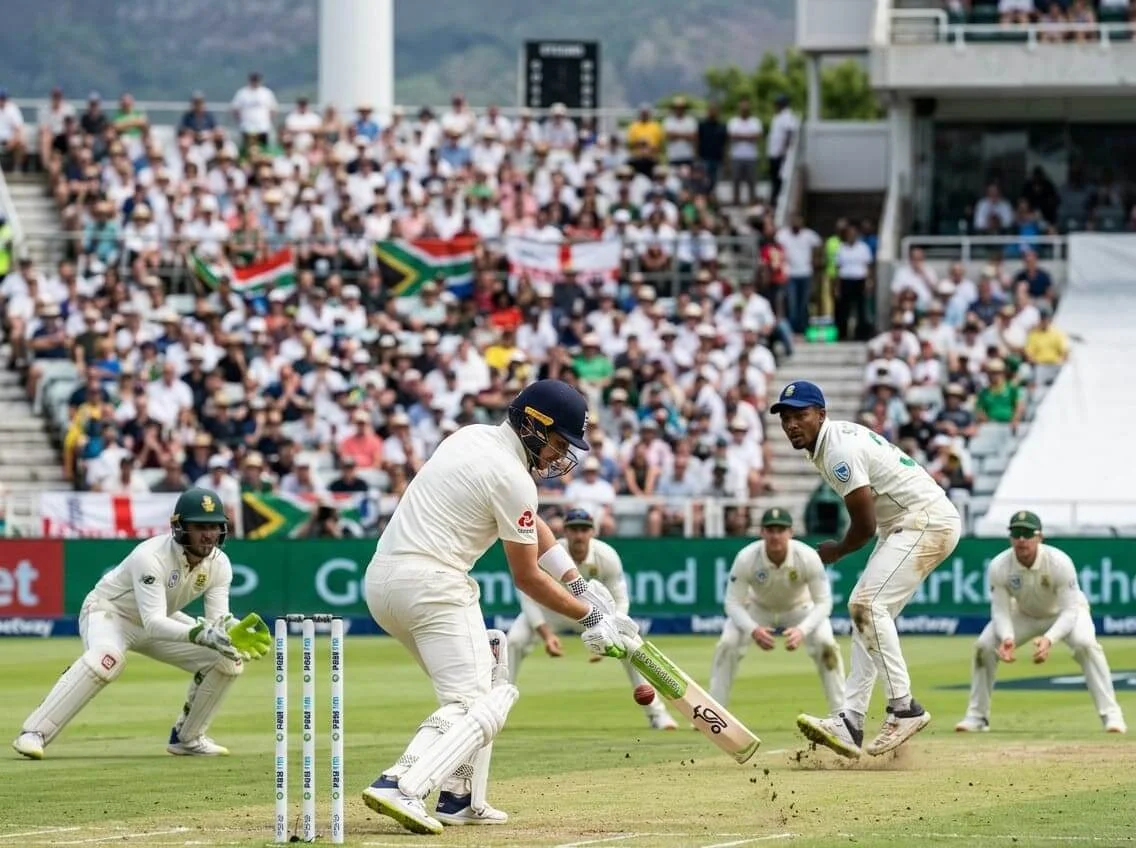
Many people feel confused when they try to understand how to win a Test match. The game lasts five days, players bat for long hours, and sometimes there is no clear result. For beginners, especially those watching from countries like the USA or UK, it can feel slow and hard to follow. You might think, “Why is this match still going?” or “What are teams actually trying to achieve?” This confusion makes it difficult to enjoy the game or understand what is really happening.
Real Test matches show a clear pattern. Winning a Test match is not random. It follows a clear system based on runs, wickets, and time. Teams plan their strategy step by step and adjust based on the situation. Teams win a Test match with wickets, a protected lead, and careful use of the time left, and almost every captain decision comes back to those three things.
Quick Takeaways: How to Win a Test Match
- Score big runs in the first innings to gain control
- Take wickets regularly to break partnerships
- Use time wisely across all five days
- Make smart captain decisions like declaration and bowling changes
- Take advantage of pitch changes, especially in later days
- Put pressure on the opponent in the fourth innings
Quick Answer: How to Win a Test Match
To win a Test match, a team must:
- Score more runs than the opponent
- Take the required wickets (usually 20)
- Manage time across five days
In simple words, teams win by controlling runs, wickets, and time together.
What Is Test Cricket?
Test cricket is the longest format of cricket. It is played over five days and is considered the most strategic form of the game.
Each team:
- Plays two innings
- Has no fixed overs limit
- Must balance attack and defense
Unlike fast formats, Test cricket rewards patience, planning, and smart decisions.
How Long Is a Test Match?
A Test match lasts up to five days.
Each day includes:
- Three sessions
- Around 90 overs scheduled
Sometimes fewer overs are played due to weather or slow play.
The Format of Test Cricket
- Two teams compete
- Each team bats twice
- No fixed overs per innings
- Match lasts up to five days
This format allows teams to recover, plan, and change strategy during the game.
What Are the Rules of a Test Match?
- Each team bats twice
- Bowlers must take wickets to win
- Teams can declare their innings to save time
- Matches can end in different results
Match results include:
- Win
- Loss
- Draw
- Tie (very rare)
Key Rules and Structure
- 11 players per team
- Two innings each
- No overs limit per innings
- Pitch conditions change daily
These rules create a game that changes over time.
The 3 Pillars of Winning a Test Match

How a Team Wins a Test Match
Start → Win Toss → Bat First → Score Big Runs → Build Lead → Bowl Opponent Out → Set Target → Pressure in 4th Innings → Win Match
To clearly understand how to win a Test match, focus on these three pillars:
Runs
Teams must score big totals, especially in the first innings.
Wickets
Teams usually need 20 wickets to win. In an innings victory, only 10 wickets are needed.
Time
Teams must manage all five days smartly to force a result.
For official details, you can refer to the rules provided by the International Cricket Council, which governs Test cricket worldwide.
How to Win a Test Match (Step-by-Step Strategy)

Strong First Innings Batting
Teams aim to build a big score early. This gives control of the match.
Apply Pressure with Bowling
Bowlers try to take early wickets and stop scoring.
Build a Lead
A lead creates pressure and gives advantage.
Smart Declaration
Captains declare the innings to save time and push for a win.
Attack in Final Innings
Teams focus on taking wickets quickly to win the match.
Follow-on Rule in Test Cricket
The follow-on rule is a powerful strategy.
If a team is behind by 200 or more runs, the opponent can force them to bat again immediately.
This increases pressure and helps teams move closer to victory.
How Match Situation Changes Strategy
Batting First
Build a strong total and control early stages.
Chasing
Play carefully and handle pressure.
Match Situation Thinking
Teams do not rush. They protect wickets and wait for the right moment.
Session Strategy in Test Cricket
Morning Session
Best for bowlers. The ball swings more.
Afternoon Session
Balanced for both teams.
Evening Session
Easier for batting.
Winning teams plan session by session.
How Pitch Conditions Change in a Test Match

- Day 1 is good for batting
- Day 3 starts to wear
- Day 5 becomes rough and difficult
This helps bowlers, especially spin bowlers.
Why the 4th Innings Is the Hardest
- Pitch becomes difficult
- Bowlers get more help
- Pressure increases
This is why chasing is hard.
Day-by-Day Winning Plan
| Day | Focus | Strategy |
|---|---|---|
| Day 1 | Build score | Bat carefully |
| Day 2 | Big total | Stay consistent |
| Day 3 | Take wickets | Attack |
| Day 4 | Set target | Declare smartly |
| Day 5 | Win match | Take wickets |
The Role of Captaincy in Winning
Key Decisions That Help Win a Test Match
| Situation | Smart Decision |
|---|---|
| Big first innings score | Bat long and build pressure |
| Opponent behind by 200+ runs | Enforce follow-on |
| Strong lead | Declare at the right time |
| Final innings | Use attacking field placements |
| Day 5 pitch | Use spin bowlers effectively |
Captains make key decisions:
- When to declare
- Field placements
- Bowling changes
Good decisions can change the match result.
Why Some Test Matches End in a Draw
Draw happens when:
- Time runs out
- Weather interrupts play
- Teams play defensively
Time management is very important.
Common Mistakes Teams Make
Beginner Thinking vs Real Test Match Strategy
Beginner: “Why are they playing so slow?”
Reality: Teams protect wickets to build long innings and control the match.
Beginner: “Why not chase fast?”
Reality: Pitch conditions and pressure make fast chasing risky in Test cricket.
Beginner: “Why declare early?”
Reality: Teams need enough time to bowl the opponent out and force a result.
- Batting collapse
- Poor declaration timing
- Defensive play
- Weak bowling
Avoiding these mistakes increases winning chances.
Simple Example of a Winning Scenario
Team A scores 400 runs.
Team B scores 250 runs.
Team A gets a lead of 150 runs.
Then Team A scores quickly and declares.
Team B must chase under pressure on a difficult pitch.
Most teams fail in this situation.
Key Features of Test Cricket
- Played over five days
- Focus on patience and skill
- Strategy matters more than speed
- Conditions change over time
FAQs
How many wickets are needed to win a Test match?
Usually 20 wickets, but sometimes only 10 in an innings victory.
Can a Test match end without a winner?
Yes, it can end in a draw or rarely a tie.
Why is the fourth innings difficult?
Because the pitch becomes harder and pressure increases.
What is a declaration in Test cricket?
It is when a team ends its innings early.
Conclusion
From a practical understanding of Test cricket, winning a match always comes down to control, patience, and smart decision-making over time. Teams that manage runs, take wickets at the right moments, and use time wisely are the ones that win consistently. When you start observing matches with this mindset, everything begins to make sense, from slow batting to strategic declarations and pressure in the fourth innings. This understanding comes from analyzing real match patterns and team strategies. Once you learn how to win a Test match, you move from just watching the game to truly understanding it at a deeper level.
